On the island of Sunset Beach, North Carolina, a residents' group called Sunset Vision wanted a bike rack for seven bikes at the beach access at Main Street and 40th Street. It did not ask the town to find the money. It set out to raise the cost itself, a few hundred dollars, on the understanding that the Town of Sunset Beach would receive the donation, buy the rack and install it. The Sunset Beach bike rack is about as small as a public project gets, and it holds the core of how to propose a project to your city: make it easy for the city to say yes.
That means knowing who decides, when they decide, and what they need in front of them. None of it is secret. Most residents just never see the machinery.
01Figure out who owns the problem
Every piece of public space belongs to someone. Parks belong to a parks department or a separate park district. Streets, sidewalks and street trees usually belong to public works or a transportation department. School grounds belong to the school district, which is often a separate government with its own board and budget. Libraries may be city, county or independent.
Start by identifying the owner, then find the staff person responsible for your area. A phone call or email to a parks planner or a public works engineer often gets more done than a letter to the mayor.
For a small fix (a broken light, a missing sign, a pothole), you do not need a proposal at all. Use your city's 311 line or online service request system. Proposals are for new things.
02Learn the budget calendar
This is where most resident proposals fail. They arrive at the wrong time.
Cities usually separate an operating budget, which pays for staff and day-to-day services, from a capital budget, which pays for things that last: new equipment, buildings, paths, fields. Most cities plan capital spending through a multi-year capital improvement program, updated once a year and adopted alongside the annual budget. Departments typically submit their capital requests months before the council votes.
If you want a new playground or a dog park, the real decision point is when the parks department drafts its capital requests, not when the council holds budget hearings. Ask the department when that is. In many cities the answer is a full year before the money would be spent.
New York City formalizes this through its community boards. Each year, every one of the 59 boards submits a Statement of Community District Needs and a ranked list of capital and expense budget requests, as required by the City Charter. Residents who join a board's budget committee meetings while the list is drafted have a direct line into the city's budget process.
03Write a one-page proposal
Officials read a lot. A single clear page does more than a binder.
Include what you want (one sentence), where (an address or park name and a photo of the site as it is), why (the problem, in concrete terms), who supports it, what it costs (an estimate, even rough, with a source), and who will help maintain it.
A good example of the "why" comes from a Framingham, Massachusetts resident who asked for an enclosed dog park. The Framingham dog park idea pointed out that the town had no enclosed dog park, that owners drove about six miles to the nearest options, and that the infrastructure needed was simple: grass, a waste can and a chain-link fence. That is the kind of specific, modest framing that lets staff picture the project.
04Show support, and show it the right way
Petitions help, especially when signers clearly live nearby. In Tampa, a petition for a dog park at Henry and Ola Park in Seminole Heights drew close to 300 supporters and laid out a whole organizing structure, from a city liaison to a media liaison. The Seminole Heights dog park petition is a good model of showing a city that residents are organized, not just enthusiastic.
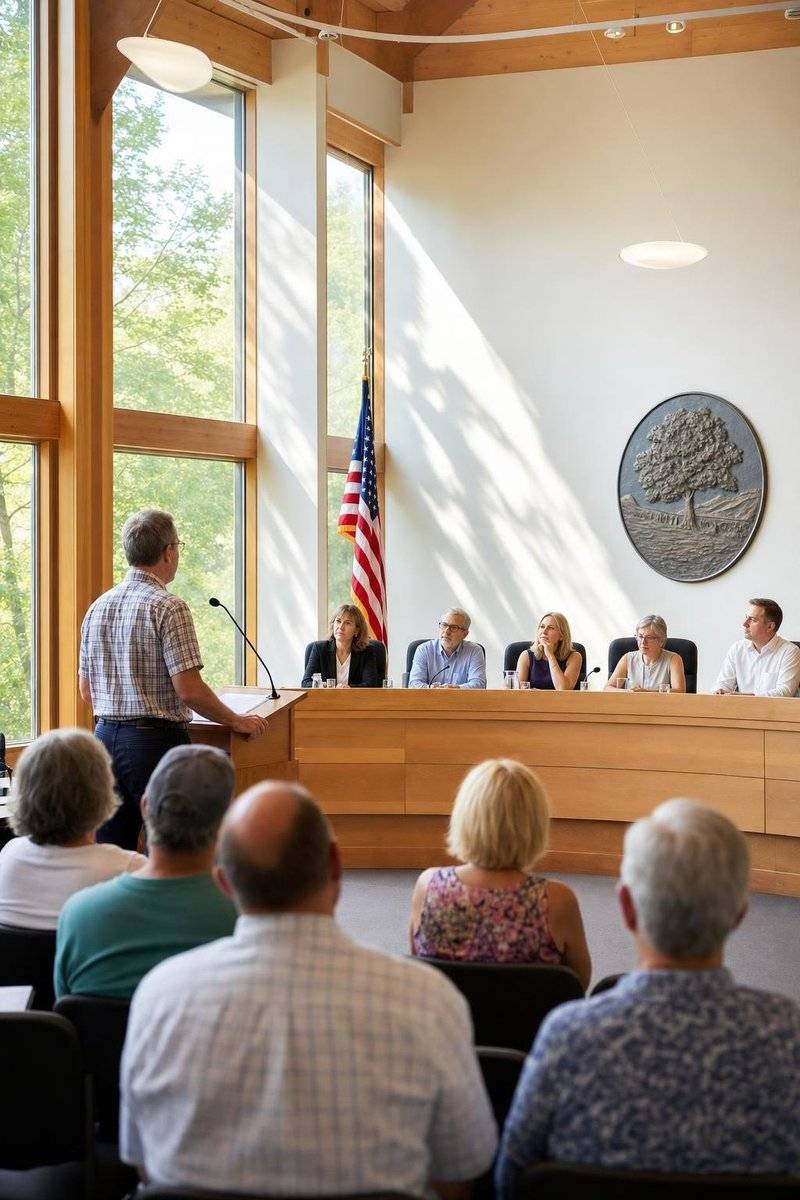
Letters from neighborhood associations, schools, businesses and local nonprofits often count for more than signatures. So does turning up. Speak during public comment at a council or parks board meeting; most councils allow a few minutes per speaker. Be brief, be specific and bring your one-page proposal.
05Offer to share the cost
A proposal that comes with money attached moves faster.
Some cities have programs built for this. Seattle's Neighborhood Matching Fund, created in 1988 and run by the Department of Neighborhoods, matches community contributions of cash, donated materials, professional services or volunteer time for projects that residents plan and carry out. Many other cities have similar neighborhood grant or matching programs under different names.
Residents can also offer a direct contribution. In Pagosa Springs, Colorado, the Friends of Reservoir Hill submitted plans for an observation deck at the top of the town's downtown nature park, got the town's approval and then raised the money with a matching donor. Sunset Vision took the same approach on a smaller scale with its bike rack.
Before you collect any money, ask the city's finance office how it accepts restricted donations. Gifts to a municipality for exclusively public purposes are generally tax deductible under Section 170(c)(1) of the Internal Revenue Code, and many cities set up a dedicated fund for a single project.
06Use participatory budgeting if your city has it
In cities with participatory budgeting, residents can submit ideas directly and see them put to a public vote. New York, Cambridge and other cities accept ideas from residents as young as 11 or 12. Our guides on what is participatory budgeting and participatory budgeting in NYC explain how ideas move from a meeting to a ballot.
07Expect a long road
Even a well-supported project can take two or three years from first email to ribbon cutting. Staff change, budgets tighten, designs get revised. Keep a simple record of every contact and every commitment. Send short updates to your supporters so they stay with you.
And if the answer is no, ask what would change it. Sometimes the problem is the site, sometimes the timing, sometimes maintenance. A no with a reason is the start of the next proposal.
For funding ideas once you have a yes, see the funding community projects section, especially community grants.
FAQ
Who do I contact to propose a project to my city?
Start with the department that owns the space: parks for parks, public works or transportation for streets and sidewalks, the school district for school grounds. Find the staff member responsible for your neighborhood and contact them directly. Copy your council member or alderman, whose office can help with follow-up and budget requests. For small repairs, use 311 instead.
When is the best time to propose a city project?
Before the department drafts its capital budget requests, which in many cities is close to a year before the money would be spent. Ask the department when its capital planning starts and submit your proposal before then. Proposals that arrive during council budget hearings are usually too late for the coming year, though they can still be lined up for the next cycle.
What should a project proposal to the city include?
Keep it to one page: what you want, where it would go, why it is needed, who supports it, an estimated cost with a source, and who will help maintain it. Add a photo of the site as it is today. Letters of support from neighborhood associations, schools or businesses strengthen it. Officials respond best to specific, modest, clearly located proposals.
Can residents pay for a public project themselves?
Often, yes. Many cities accept donations for specific projects into a dedicated fund, and some run matching programs, such as Seattle's Neighborhood Matching Fund, that add city money to resident contributions. The city still needs to approve the project, own the result and agree to maintain it. Ask the finance office how restricted gifts are handled before raising money.
How long does it take for a city to approve a project?
Small projects funded by residents can be approved within weeks. Projects that need capital funding usually wait for the next budget cycle, and design, bidding and construction add more time. Two to three years from first contact to completion is common for park improvements. Staying in touch with staff and supporters throughout makes a real difference.