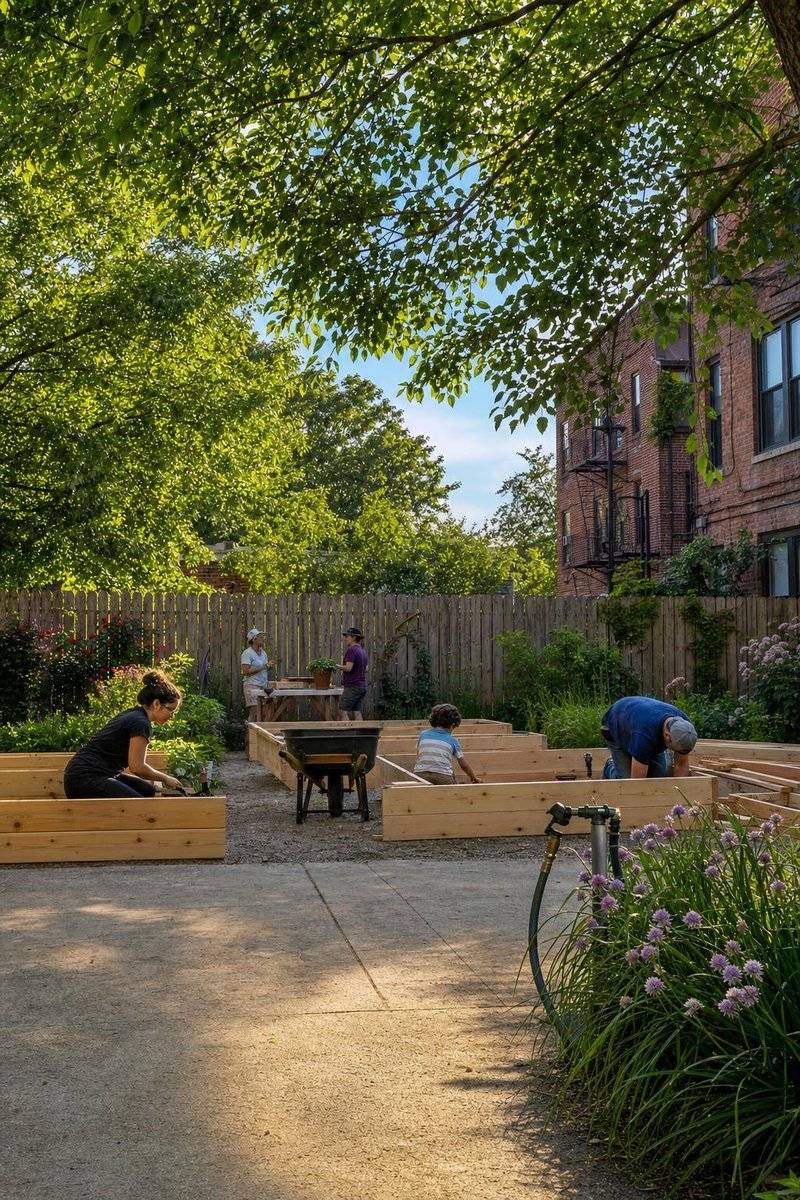
New York's community gardens began on vacant lots in the 1970s, some of them planted without anyone's permission. In 1973 a group calling itself the Green Guerrillas threw "seed grenades" over fences on the Lower East Side. Five years later the city set up GreenThumb, which NYC Parks now describes as the largest urban gardening program in the country, supporting more than 550 gardens. If you want to know how to start a community garden, that history holds the first lesson: the gardens that survived were the ones that eventually got a formal agreement with the landowner.
The planting is the easy part. What follows is how to start a community garden step by step, in the order most extension services and the American Community Gardening Association (founded in Chicago in 1979) recommend, with the practical detail that tends to get skipped.
01How to start a community garden, step one: people, not a site
A garden needs a core group before it needs land. Three to five committed people is enough to begin. Hold a first meeting at a library, church hall or recreation center and find out who wants plots, who has skills (carpentry, plumbing, bookkeeping, a little legal knowledge) and who will still be around in August when the weeds peak.
Decide early what kind of garden this is. Individual plots rented for a small fee? A shared food garden that supplies a pantry? A teaching garden for a school or library? The answer changes the layout, the rules and which funders will be interested.
02Find land, then find the owner
Look for three possible sites, not one. Good candidates are vacant city lots, unused corners of parks, school grounds, church property and land held by housing authorities. Check each for sun (at least six hours a day for most vegetables), access for a truck delivering soil, and a nearby water source.
Use your county's online parcel viewer or tax maps to identify the owner. For public land, the right contact is usually the parks department, the public works office or a city land bank.
Then ask for written permission. NC State Extension suggests asking for at least three years of use, since soil building and bed construction take a season or two to pay off. Sample land use agreements, such as those reprinted by the North Central Texas Council of Governments from ACGA templates, cover the term, liability, maintenance, and how much notice the owner must give before changing the land's use. Sixty days is a common figure in those templates. Without that clause a garden can lose its site with a phone call.
03Water is the expensive surprise
Running a new water line to a lot can cost more than everything else in the first year combined. Before you commit to a site, find out where the nearest tap or hydrant is and who pays the bill. Some cities let gardens use a hydrant with a permit; others require a metered connection. Rain barrels help, but they will not carry a vegetable garden through a dry July.
Soil comes next. Urban lots often contain lead or other contaminants from old buildings. Have the soil tested (cooperative extension offices offer tests for a modest fee), and if the results are poor, build raised beds and bring in clean soil and compost.
04Rules, plots and a gardener agreement
A garden with no rules runs on goodwill until the first dispute. Write a short gardener agreement covering plot fees, what happens to abandoned plots, shared chores, use of chemicals, hours and how decisions get made. NC State Extension publishes a sample gardener memorandum of understanding that many groups adapt.
Keep it short enough that people read it. Two pages is plenty.
05What it costs: a realistic first-season budget
A basic garden budget covers fencing, lumber for raised beds, soil and compost, a water connection and hoses, tools and a lockbox, signage, and insurance if the landowner requires it. Prices vary by region, so get quotes locally.
Two real examples show the scale. In 2013 Philadelphia Parks and Recreation's Youth Urban Agriculture Program planned a 40-by-60-foot fenced garden at the Rivera Recreation Center, with raised beds for children and larger ones for gardeners from the neighboring Mann Older Adult Center. The planting list was specific (three fruit trees, twelve berry bushes, fifty perennials, 250 strawberries and groundcovers, three cubic yards of mulch) and cost about $2,100, raised from 50 backers in an online campaign. The Rivera Rec Center community garden is a good model for how specific a plant budget can be.
In Newton, North Carolina, the Catawba County Library planned a garden with twelve raised beds, herb and flower pots and a shade garden for reading programs. Its 2014 campaign for the library garden reached about $3,200 of a $4,860 goal. Gardens attached to an existing public institution have an advantage here: the library or recreation center already handles insurance, water and a meeting space.
For grant sources, see the guide to community garden grants. For smaller sums raised locally, community fundraising ideas covers plant sales, sponsored beds and matched campaigns.
06The first season
Start smaller than you want to. Twelve beds that are fully planted and watered look better, and recruit more members, than thirty half-used ones. Hold a build day with a clear task list. Set up a shared calendar for watering. Put a sign on the fence with a contact address, because neighbors who walk past are your next gardeners.
Expect one problem you did not plan for. In many gardens it is theft of produce, in others a broken spigot or a dispute over a shady plot. A gardener agreement and a monthly meeting handle most of it.
FAQ
How much does it cost to start a community garden?
Costs depend mostly on the site. A garden on land with an existing water tap and decent soil can start with a few thousand dollars for lumber, soil, fencing and tools. The Rivera Rec Center garden in Philadelphia raised about $2,100 for plants and mulch alone. A site that needs a new water line or major soil replacement can cost several times more, so get local quotes before setting a fundraising goal.
Do I need permission to start a community garden on a vacant lot?
Yes. Gardening on land you do not own without permission can end with the garden removed and no recourse. Identify the owner through your county's parcel records, then ask for a written land use agreement. For public land, contact the parks department or the city's land bank. Ask for at least three years, plus advance notice if the owner plans to sell or build.
How big should a community garden be?
Start with what your core group can maintain in the first season, often ten to twenty beds. The Rivera Rec Center garden in Philadelphia was planned at 40 by 60 feet, which held children's beds, larger beds for older gardeners and fruit plantings. You can expand once you know how many members stay active through the summer. Leave room for paths wide enough for a wheelbarrow.
Who is liable if someone gets hurt in a community garden?
That depends on the land use agreement. Many landowners, including cities, require the garden group to carry liability insurance and gardeners to sign a waiver. Gardens attached to a library, school or recreation center are sometimes covered by that institution's policy. Ask the landowner what they require before the first build day, and put the answer in writing.
Can a community garden sell its produce?
Some do, through farm stands or local markets, but rules vary by city and state, and many land use agreements limit commercial activity. Many gardens donate surplus to food pantries instead. Philadelphia's Rivera garden plan, for example, had children share the harvest with their families and community. Check your agreement and local health rules before selling anything.