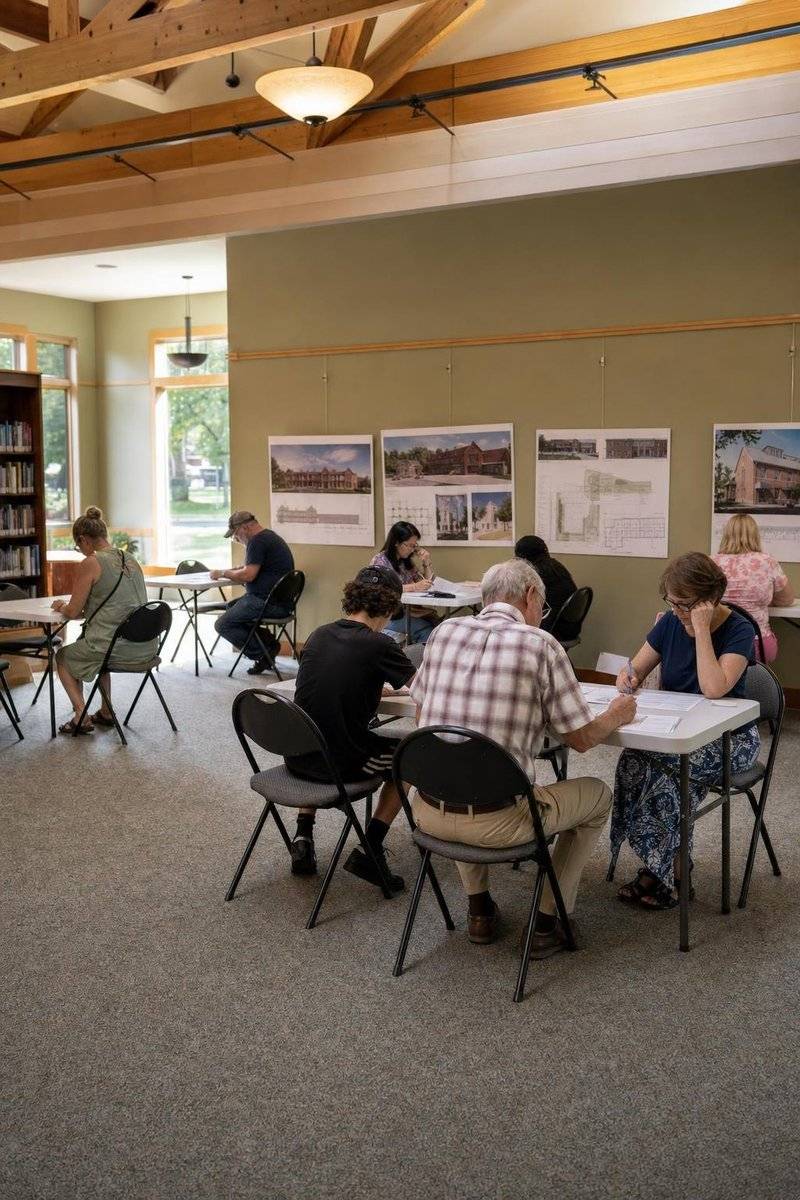
In March 2015, 2,727 people in Cambridge, Massachusetts voted on how to spend $500,000 of their city's capital budget. Anyone living in the city aged 12 or older could take part, regardless of immigration status. Six projects won, and the city committed $528,000 to them. It was a small slice of a large budget, but it was real money. That is civic engagement in its most concrete form: residents deciding something, not just being consulted about it.
Most civic engagement is less dramatic. It is a resident who calls 311 about a broken streetlight, a parent who joins the parks advisory board, a neighborhood group that raises the last $5,000 for a playground. This section of Citizinvestor looks at the ways ordinary people shape what their city builds and pays for, with a focus on budgets and public spaces.
01What civic engagement means in practice
Political scientists have argued about the definition for decades. Alexis de Tocqueville, traveling through the United States in the 1830s, was struck by how readily Americans formed associations to solve local problems instead of waiting for the government. Much later, the Census Bureau and AmeriCorps began measuring that habit through a survey supplement on civic engagement and volunteering, asking people whether they attend public meetings, contact officials, work with neighbors on community problems or volunteer.
For our purposes, civic engagement means any regular way a resident takes part in public life beyond voting: speaking at meetings, serving on boards, organizing neighbors, proposing projects, deciding on budgets and putting money into public things. Voting matters, of course. It is just not the only lever.
02Deciding on the budget directly
Participatory budgeting is the most structured form of civic engagement around public money. Residents propose ideas, volunteers turn them into costed projects with city staff, and the community votes. The city then funds the winners.
It began in Porto Alegre, Brazil in 1989 and reached the United States in 2009, in Chicago's 49th Ward. New York City's council districts took it up in 2011, and in 2018 New York voters approved a charter change that created a Civic Engagement Commission and called for a citywide process.
Three guides in this section cover it. What is participatory budgeting explains the process step by step, including who can vote and what kinds of projects qualify. Participatory budgeting examples looks at how the model has worked in Porto Alegre, Paris, Chicago, Vallejo, Cambridge and elsewhere, including where it ran into trouble. Participatory budgeting in NYC covers New York's two processes, the City Council's district-based PB and the citywide program called The People's Money.
03Asking the city for something
Not every good idea fits a voting cycle. Many neighborhood improvements start with a single request: a crosswalk, a bench, a community garden on a vacant lot. Our guide on how to propose a project to your city explains who to approach, how city capital budgets work, and why timing matters more than most residents expect. It also covers formal channels like New York's community board budget requests and Seattle's Neighborhood Matching Fund, created in 1988.
04Putting money in
Some residents go a step further and help pay. Civic crowdfunding covers the model in which cities and residents co-fund public projects online, from London's mayoral crowdfunding program to Rotterdam's plank-by-plank pedestrian bridge. The funding community projects section goes deeper on grants and fundraising for gardens, playgrounds, trees and dog parks.
Small examples are everywhere. In Central Falls, Rhode Island, just after the city emerged from Chapter 9 bankruptcy, 63 backers pledged almost $10,000 so that Jenks Park could get five sturdy trash and recycling bins built by a local nonprofit. In Pagosa Springs, Colorado, a friends group raised the money for an observation deck in its downtown nature park. Neither project would count as civic engagement in a textbook survey. Both were.
05Engagement that lasts
Here is the uncomfortable part. Plenty of engagement efforts fade after one round. Porto Alegre's participatory budget, praised by the World Bank for linking transparency with better services, was later suspended. Online petitions pile up likes and then nothing happens.
The engagement that lasts tends to have three things: a real decision at stake, a public body that commits in advance to act on the result, and a group of residents who stay involved after the vote or the campaign. A parks friends group that meets monthly does more for a park than a thousand signatures.
As a side note, many cities now publish their budgets as searchable open data. Reading your own city's capital plan for half an hour is one of the least glamorous and most useful civic acts there is. You will find out what is already funded, what was cut and who to call.
FAQ
What is civic engagement?
Civic engagement is the ways people take part in the public life of their community: voting, attending public meetings, contacting officials, volunteering, serving on boards, organizing neighbors and helping decide or fund public projects. It covers both political acts and practical work on shared problems. Participatory budgeting and civic crowdfunding are two newer forms that give residents a direct say over public money.
What are examples of civic engagement in a city?
Common examples include speaking during public comment at a city council meeting, joining a parks or planning advisory board, reporting problems through 311, voting in a participatory budgeting process, starting a community garden on public land, and raising money for a neighborhood park project. In Cambridge, Massachusetts, residents aged 12 and older vote each year on part of the city's capital budget.
How can I get more involved in my local government?
Start with one issue you care about and find the board, department or council committee that handles it. Attend a meeting, read the relevant part of the city budget, and introduce yourself to the staff member responsible. If your city runs participatory budgeting, submit an idea or volunteer as a budget delegate. Consistent attendance matters more than a single dramatic appearance.
Why does civic engagement matter for public spaces?
Parks, playgrounds and street trees compete for limited city money against roads, police and fire services. Residents who show up with clear proposals, local support and sometimes a share of the funding make it much easier for officials to say yes. Many neighborhood parks improvements in American towns started with a small resident group that kept asking.
All guides in this section
- Civic Crowdfunding for Public ProjectsGuideCivic crowdfunding explained: how cities and residents co-fund parks, bridges and gardens online, from Spacehive and ioby to the critics' concerns.
- How to Propose a Project to Your CityGuideHow to propose a project to your city: find the right department, time it to the capital budget, write a one-page proposal and show local support.
- Participatory Budgeting Examples Around the WorldGuideParticipatory budgeting examples from Porto Alegre, Chicago, New York, Vallejo, Cambridge and Paris: what each funded and what went wrong.
- Participatory Budgeting in NYCGuideParticipatory budgeting in NYC: the City Council's district process, the citywide People's Money, who can vote at 11, and how ideas become projects.
- What Is Participatory Budgeting? How the Process Works and Who DecidesGuideWhat is participatory budgeting: how residents propose, develop and vote on public projects, who can take part, and the benefits and limits.