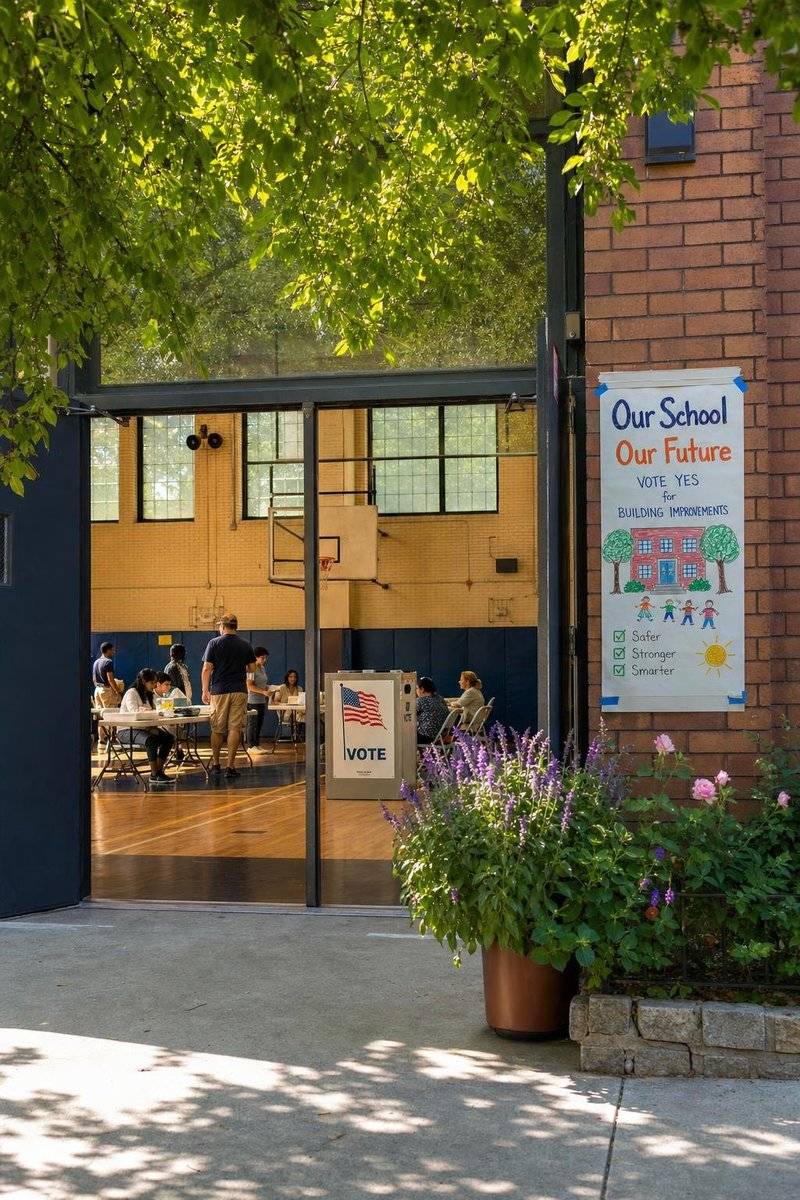
In 2011, four members of the New York City Council (Melissa Mark-Viverito, Brad Lander, Jumaane Williams and Eric Ulrich) each agreed to give residents of their districts the final say over at least $1 million of discretionary capital money. Working with the Participatory Budgeting Project and the community group Community Voices Heard, they ran a pilot that ended with residents allocating about $5.6 million to 27 projects. Participatory budgeting in NYC has grown from there into two separate programs, and it is easy to confuse them.
One belongs to the City Council and runs district by district. The other is citywide, run by the Civic Engagement Commission, and called The People's Money. They have different money, different timelines and different kinds of winning projects.
01The City Council's district process
Council members choose each year whether to join. Those who do pledge a minimum of $1 million from their discretionary capital budget, and some put in more. The number of participating districts grew from four in the pilot to more than 30 in later cycles.
Because the money is capital funding, the winning projects must be physical improvements owned by the city, with a long useful life. Typical winners include technology upgrades and bathroom renovations in public schools, playground and park improvements, library renovations, street trees, traffic safety features and upgrades to public housing grounds. Programs and staff salaries do not qualify.
Ideas
The cycle usually opens in the fall with neighborhood assemblies, where residents brainstorm ideas and sign up as volunteer budget delegates. Ideas can also be submitted online. Residents as young as 11 can propose a project.
Proposals
Over the winter, budget delegates group the ideas, visit sites and work with city agencies such as the Department of Education, NYC Parks and the Department of Transportation to find out whether each idea is eligible and what it would cost. Many good ideas fall out at this stage, usually because they are not a capital project, the site is not city property, or the cost is far beyond the district's pot.
The vote
In the spring, residents vote over a period of about nine days, in person at sites around the district or online. To vote, you must live in the district and be at least 11 years old. There are no citizenship or immigration requirements. Younger voters face a few extra rules, such as paper ballots for those under 13 and parental consent for teenagers voting online.
Delivery
The projects with the most votes are funded in the next city budget, up to the amount the council member pledged. Construction then follows the usual city process, which for capital projects can take several years. Council offices and the Council's participatory budgeting pages post the results of each cycle.
02The People's Money, citywide
In November 2018, New York voters approved charter amendments proposed by that year's Charter Revision Commission. One created the Civic Engagement Commission and gave it the job of running a citywide participatory budgeting program. That program is The People's Money.
It differs from the Council process in several ways. It is open to all New Yorkers aged 11 and up, regardless of immigration or incarceration status. It uses expense funding from the mayor's budget rather than capital funding, so winning ideas are programs and services, such as youth workshops or health outreach, delivered by community-based organizations. And it runs on a two-year rhythm.
In the first year, residents submit ideas at public workshops and online through the city's Participate.nyc.gov site in the fall. Over the winter, borough assemblies made up of randomly selected residents meet for four sessions each to choose which ideas go on the ballot. Voting follows in the spring and summer. In the second year, community organizations develop the winning ideas into programs, working with the commission.
The commission's early years were slow. Local reporting found little progress on the citywide program for some time after the charter vote, partly because the charter required the program without guaranteeing a budget for it.
03Community boards: the older channel
Long before participatory budgeting, New York's 59 community boards had a formal role in the budget. Each year every board submits a Statement of Community District Needs and a list of capital and expense budget requests, ranked by priority, as required by the City Charter. The Office of Management and Budget publishes the city's responses.
It is a slower and less visible channel than a public vote, but it covers far more money. Residents can influence it by attending their community board's budget committee meetings in the summer and fall, when the requests are drafted. Our guide on how to propose a project to your city covers this kind of route in more detail.
A small aside on the pilot: three of its four council members went on to citywide office. Melissa Mark-Viverito became Council Speaker in 2014, Jumaane Williams was elected Public Advocate in 2019, and Brad Lander became City Comptroller in 2022. The first officials to hand their discretionary money to a public vote were ambitious politicians, not marginal ones.
04Taking part
Find out whether your council member is participating in the current cycle; the Council lists participating districts on its website. Go to an idea assembly in the fall, or submit an idea online. If you have a few hours a month over the winter, volunteer as a budget delegate. That is where you learn how city capital projects actually get scoped and priced, and it is the stage with the most influence over what appears on the ballot.
For background on the model and its origins in Brazil, see what is participatory budgeting. For how other cities run it, see participatory budgeting examples.
FAQ
Who can vote in NYC participatory budgeting?
For the City Council process, you must live in a participating council district and be at least 11 years old. Citizenship and immigration status do not matter. For The People's Money, run by the Civic Engagement Commission, all New Yorkers aged 11 and up can vote, regardless of immigration or incarceration status. Some extra rules apply to younger voters, such as paper ballots for those under 13.
How much money is involved in PBNYC?
Each participating council member pledges at least $1 million from their discretionary capital budget, and some pledge more. In the 2011 pilot, four districts together allocated about $5.6 million to 27 projects. With more than 30 districts taking part in later cycles, the total has been much larger. The citywide People's Money uses a separate pot of expense funding from the mayor's budget.
What is the difference between PBNYC and The People's Money?
PBNYC is the City Council's district-level process, funded with capital money, so winners are physical projects such as school upgrades and park improvements. The People's Money is a citywide process created by the 2018 charter amendments and run by the Civic Engagement Commission. It uses expense funding, so winners are programs delivered by community organizations, and it runs on a two-year cycle.
How long does it take for a winning project to be built?
Winning PBNYC projects are funded in the following city budget, but construction follows the normal capital process, which often takes several years for park or building work. Simpler purchases, such as school technology, can arrive much sooner. Council member offices and the Council's participatory budgeting pages are the best places to track individual projects.
Can I submit an idea if I am not a US citizen?
Yes. Both NYC processes are open to residents regardless of citizenship or immigration status, from age 11. You can submit ideas at a neighborhood assembly or online, volunteer as a budget delegate and vote, as long as you live in the participating district for the Council process or in New York City for The People's Money.