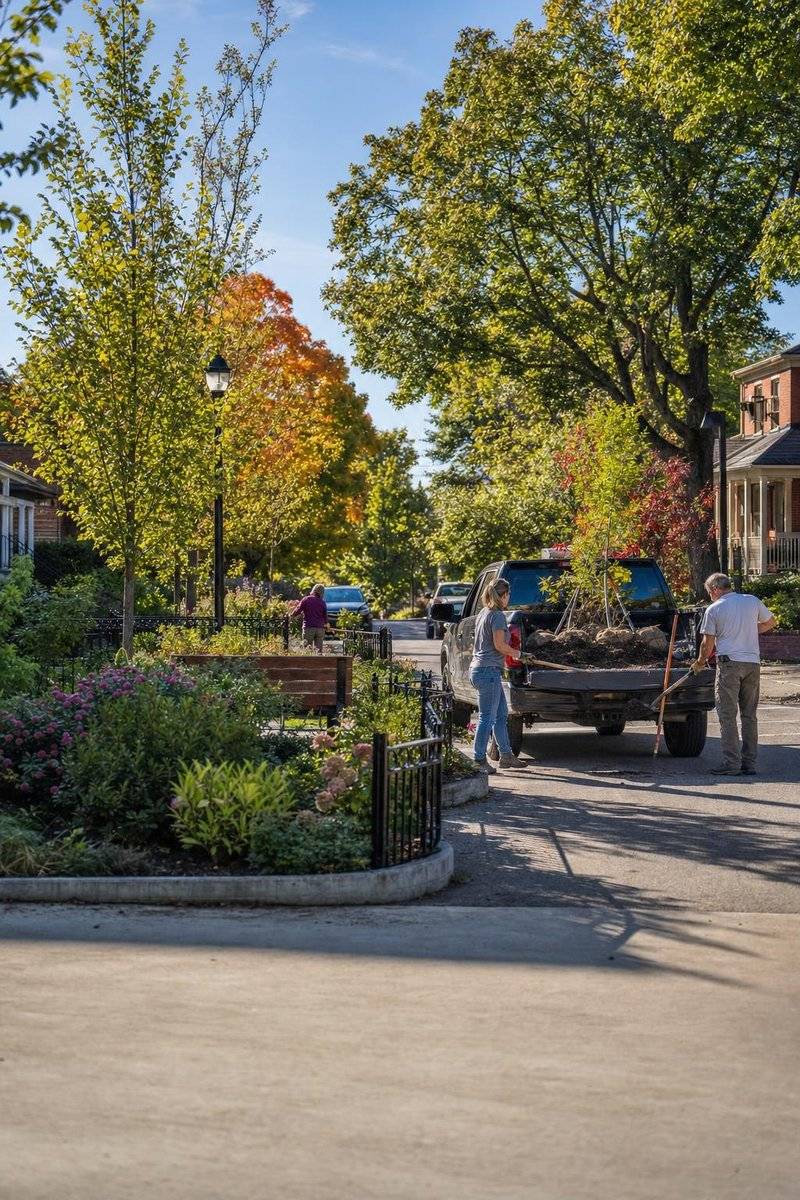
In the summer of 2013, a fenced plot of 40 by 60 feet next to the Rivera Recreation Center in North Philadelphia was waiting for plants. The city's Youth Urban Agriculture Program had the site, the staff and the children. What it lacked was $2,100 for three fruit trees, a dozen berry bushes, 250 strawberry plants and some mulch. Fifty people pledged online, and the Rivera Rec Center community garden went ahead.
That small sum shows how to fund a community project in most American towns. Almost nothing is paid for from one source. A playground, a dog run or a row of street trees is usually stitched together from a city budget line, a grant with conditions, money from local businesses and a final stretch raised from neighbors. The skill is knowing which piece to ask for first.
This section of Citizinvestor collects what we have learned about each of those pieces, with real programs and real projects as examples.
01Where public money for small projects comes from
Most parks and neighborhood improvements start in a municipal budget. Cities split spending into an operating budget (salaries, mowing, water bills) and a capital budget for things that last, such as new equipment, paths and buildings. A project that fits a capital plan is far easier to fund than one that needs a new yearly expense, because the city can fund it once and absorb the upkeep.
Federal money reaches neighborhoods mostly through programs that cities and states administer. The Community Development Block Grant program run by the U.S. Department of Housing and Urban Development (HUD) can pay for parks and playgrounds in areas where most residents have low or moderate incomes. Chickasha, Oklahoma combined city money with a CDBG award to replace a playground in Centennial Park. The Land and Water Conservation Fund, created by Congress in 1965, sends matching grants through state park agencies for outdoor recreation, and the USDA Forest Service's Urban and Community Forestry Program supports tree planting and care.
Private funders (community foundations, KaBOOM! for play spaces, corporate giving programs) tend to be faster and smaller, and they usually ask the community to raise part of the cost.
02The match is where neighbors come in
Nearly every grant asks for a match. Sometimes it is cash, sometimes volunteer hours or donated materials. That is where residents become funders.
The Naturally Nash! playground in Chicopee, Massachusetts is a clean example. The city won a $20,000 KaBOOM! construction grant that required $30,000 in total spending on equipment, put in $5,000 of its own and asked residents for the last $5,000. Fifty-two backers covered it. The Naturally Nash! playground build shows the pattern you will see again and again: the big check depends on the small ones.
03The guides in this section
Community grants explains the main grant types open to neighborhood groups and municipalities, from community foundations to federal block grants, and how a small group can apply through a fiscal sponsor.
How to start a community garden walks through the practical order of work: finding land, getting written permission, securing water, writing garden rules and planning the first season's budget.
Community garden grants covers the funders that actually back gardens, including USDA urban agriculture grants, cooperative extension programs and local food-access funds.
Playground grants looks at how towns pay for play equipment and safety surfacing.
How to build a dog park covers site selection, fencing, water and surfacing, with Fort Lauderdale and Indianapolis as examples.
Tree planting grants explains urban forestry funding, from the Forest Service program to Tree City USA standards and city giveaway programs like TreePhilly.
Community fundraising ideas collects fundraising formats that have worked for public projects, from matched online campaigns to per-tree pricing and front-porch events.
04What separates funded projects from stalled ones
Small civic projects from the early 2010s, the funded and the stalled, share a few patterns.
They had a public owner who said yes early. A garden on city land, a dog park in a city park, bins in a city square: in each case a parks department or public works office had agreed to the project before any money was raised. Projects without that agreement tended to stay ideas.
They priced the thing precisely. A tree planting effort in Alexandria, Virginia asked for exactly $380 per tree and explained it: about $100 for the tree, $25 to $30 for a watering bag and staking, and two years of watering. Donors like arithmetic they can check.
And they named their partners. Central Falls, Rhode Island, the smallest city in the smallest state, worked with The Steel Yard, a Providence nonprofit, to design five combination trash and recycling bins for Jenks Park. The city was just out of Chapter 9 bankruptcy and had no spare capital money. A local partner made the ask believable.
Timing trips up many good ideas. Most parks departments plan their capital work a year or more ahead. Our guide on how to propose a project to your city covers that calendar in more detail.
FAQ
What is the first step to fund a community project?
Get the landowner's agreement before you raise a dollar. For most neighborhood projects that is the city parks department, public works office or school district. Ask who would maintain it and whether the city accepts restricted donations. With a written yes, grant applications and donor appeals become much easier, because funders want to know the project can actually be built.
Can a neighborhood group apply for grants without being a nonprofit?
Often yes, through a partner. Many funders require a 501(c)(3) or a government applicant, so informal groups work with a fiscal sponsor (an established nonprofit that receives and manages the money) or apply jointly with the city. Some programs, like the Seattle Department of Neighborhoods' Neighborhood Matching Fund, were designed from the start to fund groups of residents directly.
Are donations to a city project tax deductible?
Gifts to a state or local government made for exclusively public purposes are generally treated as charitable contributions under Section 170(c)(1) of the Internal Revenue Code. A donor who receives something of value in return may not be able to deduct the full amount. Cities usually issue a receipt from their finance office. Donors should confirm their own situation with a tax professional.
How much money do small community projects usually need?
The range is wide. The Rivera Rec Center garden in Philadelphia needed about $2,100 for plants and mulch, while the Holiday Park dog park in Fort Lauderdale set a goal of more than $81,000 for two fenced areas, water stations and benches. Price your own project with quotes from vendors and the city, then add maintenance for the first two years.
All guides in this section
- Community Fundraising Ideas for Public ProjectsGuideCommunity fundraising ideas that have paid for parks, trees and public art: matched gifts, per-item pricing, sponsorships, events and phased goals.
- Community Garden Grants and Where to Find ThemGuideCommunity garden grants from USDA urban agriculture programs, CDBG, local foundations and food-access funds, plus how gardens raise the match.
- Community Grants for Neighborhood Projects and How to Apply for ThemGuideCommunity grants explained: foundations, CDBG, state recreation funds and matching programs, and how small resident groups get funded.
- How to Build a Dog Park in Your TownGuideHow to build a dog park in your town: winning city support, choosing a site, fencing, surfacing and water, and mixing grants with local donations.
- How to Start a Community Garden: The Steps, Permission and Real CostsGuideHow to start a community garden: find land, get written permission, secure water, set garden rules and budget for the first season.
- Playground Grants for Towns and NeighborhoodsGuidePlayground grants from KaBOOM!, CDBG and state recreation funds, what they cover, safety and access rules, and how towns raise the local match.
- Tree Planting Grants for Streets and ParksGuideTree planting grants explained: the Forest Service urban forestry program, state foresters, Tree City USA and local giveaways, with real costs per tree.