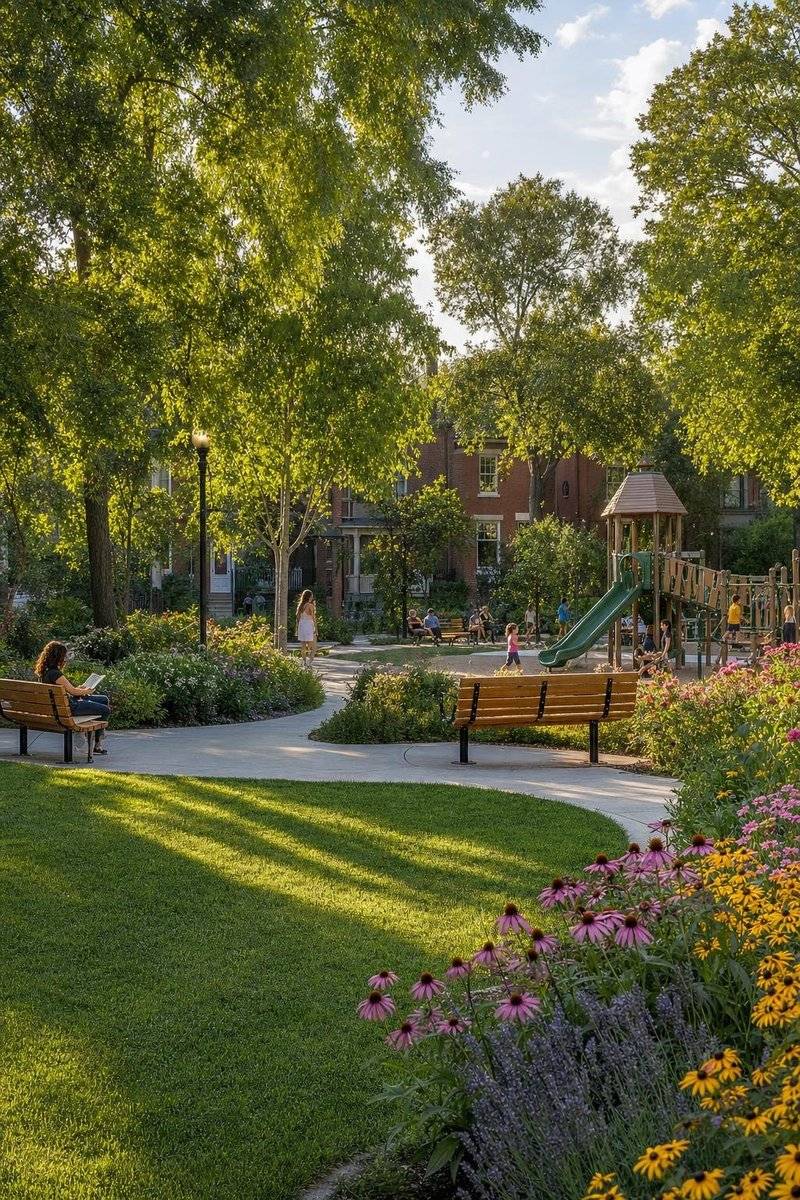
In the spring of 2013 the City of Central Falls, Rhode Island, asked its residents for a little over ten thousand dollars to replace the flimsy plastic trash cans in Jenks Park with steel bins and add recycling. Sixty-three people pledged. That is a small number and a small sum, and it is typical of what this archive records: the local projects that never make a capital budget debate but that a neighborhood notices every day.
01What the archive contains
Each page in the archive covers one project that residents helped fund, most of them between 2012 and 2016, when cities from Philadelphia to Tampa experimented with asking the public to co-fund park improvements, events and small facilities online. The pages record the place, the goal, the amount pledged, the number of backers where it is known, and what happened afterwards wherever a later source confirms it. A few entries are petitions or ideas that residents proposed without a fixed budget; they show the step before the money.
The projects fall into a handful of groups. Parks and playgrounds are the largest: a playground rebuild in Chickasha, Oklahoma, a tunnel slide in Asheville, a dog park in Fort Lauderdale. Trees and gardens come next, from Philadelphia's fall tree planting to a community garden at a Philadelphia recreation center. Then there are the less predictable ones: a statue the town of Hercules, California, wanted back, oxygen masks for pets on Omaha's fire trucks, a holiday sign in Orlando, aviation lessons for teenagers in Hayward.
02How to read the numbers
The goal on each page is the amount the organizers asked the public for, which is often only part of the project's cost. Cities frequently paired online pledges with a grant, a budget line or a foundation match, so a campaign that raised twenty percent of a larger total may still have produced a finished park. Where the page says the outcome could not be confirmed, that is exactly what it means: no reliable later source was found.
03What the archive shows
Three patterns stand out. Small, concrete asks did best: bins, benches, bike racks and trees, where a resident could picture exactly what their twenty dollars bought. Projects with a named city partner did better than those without one, because the city could promise maintenance. And projects in wealthier neighborhoods tended to fill faster, which is one reason several cities later moved toward participatory budgeting, where public money is shared out by vote rather than by who can afford to give.
The funding guides take those lessons further, source by source.
Every project in the archive
- Four Mile Run Park Fall Tree Planting, AlexandriaAlexandria, VAArlandria neighbors raised money tree by tree for Four Mile Run Park in 2014. The $380-per-tree budget, the volunteers, and the fall planting.
- Angels Creek Trail and Bike Facilities in Angels CampAngels Camp, CAAngels Camp raised money in 2016 for signs, markings and bike racks to kick off the Angels Creek Trail. The 5.1-mile plan and where it went.
- Three Months of Bicycle Sundays on Cañada RoadBelmont, CASan Mateo County asked residents to fund 12 car-free Bicycle Sundays on Cañada Road in 2013. Costs, ranger duties and how the program carried on.
- Connecting Blind Children with Technology in BostonBoston, MABoston residents fully funded a Tech Goes Home class teaching ten blind students and their families to use iPads with VoiceOver. Costs and context.
- Canton Recreation Park Tunnel Slide RepairCanton, NCIn 2015 Canton, NC raised money to repair a broken tunnel slide at Canton Recreation Park, part of a volunteer playground fix-up.
- Clean Up CF: New Bins in Jenks Park, Central FallsCentral Falls, RICentral Falls, RI raised $9,909 in 2013 for five steel trash and recycling bins in Jenks Park, designed with The Steel Yard as functional public art.
- Renovating the Centennial Park Playground in ChickashaChickasha, OKChickasha committed $185,000 with federal CDBG money and asked residents for $100,000 more to rebuild the Kids Place playground.
- Naturally Nash: A New Playground for Nash FieldChicopee, MAChicopee matched a $20,000 KaBOOM! grant and raised the last $5,000 online for a new playground at Nash Field in the Willimansett neighborhood.
- Sheldon High School Bike Parking in Eugene, OregonEugene, ORStudents in Sheldon High School's Green Club raised $1,080 online to replace 1960s wheel-bender racks in Eugene with secure inverted-U bike racks.
- I Heart Evanston Trees: A Citizen Replanting CampaignEvanston, ILEvanston residents fully funded a 2013 tree replanting drive after emerald ash borer and Dutch elm disease killed thousands of city trees.
- Holiday Park Dog Park in Fort LauderdaleFort Lauderdale, FLFort Lauderdale residents pledged over $76,000 in 2015 toward a dog park in Holiday Park. The plan, the extended deadline and the park that opened.
- Downtown Framingham Mural by Sorin BicaFramingham, MAA 2014 campaign sought $27,000 for a Sorin Bica mural at downtown Framingham's rail crossing on Routes 126 and 135. The plan and the result.
- Summer Heatwave Youth Program in Gainesville, FloridaGainesville, FLGainesville asked residents to help double Summer Heatwave, an evening program run with police and parks staff, from 500 to 1,000 teens in 2014.
- Motivation Through Aviation in Hayward, CaliforniaHayward, CAA Hayward nonprofit at the city's executive airport sought $43,200 online to train five more local teenagers as pilots at no cost to them.
- Bring Hercules Home: A Bronze Statue for Hercules, CAHercules, CAHercules, California sought funds in 2016 to acquire a cast of Paul Manship's Hercules bronze, linked to the town's powder works past.
- Universal Access Fire Rings at Memorial County ParkLoma Mar, CAA 2016 campaign sought funds for 60 universal access fire rings at Memorial County Park near Loma Mar, California. Why and what it covered.
- Middletown, Ohio Tree Project for City ParksMiddletown, OHMiddletown, Ohio lost over 200 park ash trees to emerald ash borer and asked residents in 2016 to fund replacements in ten parks. Species and plans.
- Milwaukee Streetcar: The Petition and The HopMilwaukee, WIA 2012 petition backed Milwaukee's streetcar plan. How the city funded The Hop with federal grants and TIF, and how a 2023 state law limited it.
- Work Space for Entrepreneurs in Murrieta, CaliforniaMurrieta, CAMurrieta turned its old City Hall into a startup incubator and in 2013 asked residents to fund tables and chairs for 40 new entrepreneurs.
- The Spirit of the American Navy in NapervilleNaperville, ILCentury Walk and the City of Naperville raised $77,000 to install E.M. Viquesney's sailor statue in Burlington Square Park, dedicated in October 2013.
- Restoring the Historic Hacienda Hotel, New Port RicheyNew Port Richey, FLNew Port Richey asked the public to fund engineering and environmental studies for its 1927 Hacienda Hotel, which finally reopened in 2022.
- Oxygen for Omaha's Pets: Masks for Fire CrewsOmaha, NEOmaha residents raised $1,600 online so the city's fire stations could carry pet oxygen mask kits for dogs and cats pulled from house fires.
- The Ivanhoe Holiday Sign Fund in OrlandoOrlando, FLOrlando paid $50,000 to restore the neon holiday sign on the OUC building at Lake Ivanhoe; Ivanhoe Village asked residents to fund its upkeep.
- The Reservoir Hill Observation Deck in Pagosa SpringsPagosa Springs, COAfter a fight over chairlifts on Reservoir Hill, Pagosa Springs residents raised $5,400 online, doubled by a match, for a summit observation deck.
- Litter B Gone: Solar Bins for a Philadelphia StreetPhiladelphia, PAA Philadelphia neighborhood group proposed solar compacting trash and recycling bins for its business corridor. The idea, the city's bins and the costs.
- Philadelphia Fall Tree Planting with TreePhillyPhiladelphia, PAIn fall 2012 TreePhilly asked residents to fund free yard trees for Philadelphia homeowners, part of a push toward 15,000 new trees citywide.
- Rivera Rec Center Community Garden in FairhillPhiladelphia, PAPhiladelphia Parks and Recreation raised $2,163 online in 2013 to plant a shared garden and orchard for kids and seniors at Rivera Rec in Fairhill.
- Somerville Mobile Farmers' Market Matching FundsSomerville, MAWhen grant money ran out, Somerville asked residents to fund the Mobile Farmers' Market match for SNAP and WIC shoppers in 2014.
- Binoculars for the Twin Lakes Bird Walk, Sunset BeachSunset Beach, NCA Sunset Beach, NC citizens group raised funds in 2015 for viewing binoculars at the Twin Lakes bird walk, a stop on the North Carolina Birding Trail.
- Graffiti Mural Art in Seminole Heights, TampaTampa, FLA 2013 civic idea proposed paid street murals on blank walls in Tampa's Seminole Heights. The plan, the Wynwood model, and the murals that followed.
- Seminole Heights Dog Park at Henry and Ola ParkTampa, FLA 2013 petition asked Tampa for a dog park at Henry and Ola Park in Seminole Heights. It took more than a decade; the park opened in February 2024.
- Prizes for the Hillsborough County App-a-thonTampa, FLHillsborough County opened its data to Tampa Bay developers in April 2013, and residents pledged $2,700 online for the App-a-thon prize pool.
- The Tampa Baseball Museum at the Al Lopez HouseTampa, FLA 2013 campaign sought $125,000 to turn Al Lopez's longtime Ybor City home into the Tampa Baseball Museum, which opened in 2021.
- Weekend Food Backpacks for Kids in TampaTampa, FLFeeding America Tampa Bay sought $10,800 online for a year of weekend food bags for 100 children at Oak Park Elementary School in Tampa.
- Venice Post Office Tree Trim and the Stone PinesVenice, CAVenice residents set out to trim and protect the 21 Italian stone pines around the Venice Post Office near Windward Circle, one phase at a time.
- Fix the C&O Canal Towpath Boat in GeorgetownWashington, DCA top-ranked Washington civic idea asked to restore Georgetown's mule-drawn canal boat. How a nonprofit partner and the Park Service finally did it.
- Petition to Fix the C&O Canal Towpath BoatWashington, DCA 2013 petition asked to repair The Georgetown, the mule-drawn C&O Canal boat retired in 2011. What it asked for and what came next.
FAQ
Are these projects still accepting donations?
No. The campaigns in the archive closed years ago, and none of the pages takes money. Each page records what was proposed, what was raised and, where possible, what happened next. Readers who want to support a similar project today should contact their own city's parks department or a local nonprofit.
Why do some pages not say whether the project was finished?
Because no reliable source could confirm it. Small municipal projects are rarely reported once they are installed. Rather than guess, the page states what was planned and stops there. Corrections with a source are welcome through the contact page.
How were the projects chosen?
They illustrate the range of things residents have helped pay for, across different states, budgets and outcomes, including campaigns that fell short. No project paid to be included, and the archive has no ties to any city or organizer named on its pages.
Can a town still crowdfund a public project?
Yes. Several cities still pair resident donations with public money, usually through a parks foundation or a neighborhood matching fund rather than a single online campaign. The guide to civic crowdfunding explains the current models and their limits.