In 2014 the City and County of Denver put $12 million of bonds on sale in $500 pieces, open only to Colorado residents and capped at $20,000 per buyer. The sale was planned to run for five days. It was over in about an hour. The money went to capital maintenance under the Better Denver program that city voters had approved in 2007, which is to say roofs, streets and public buildings that the buyers already walked past.
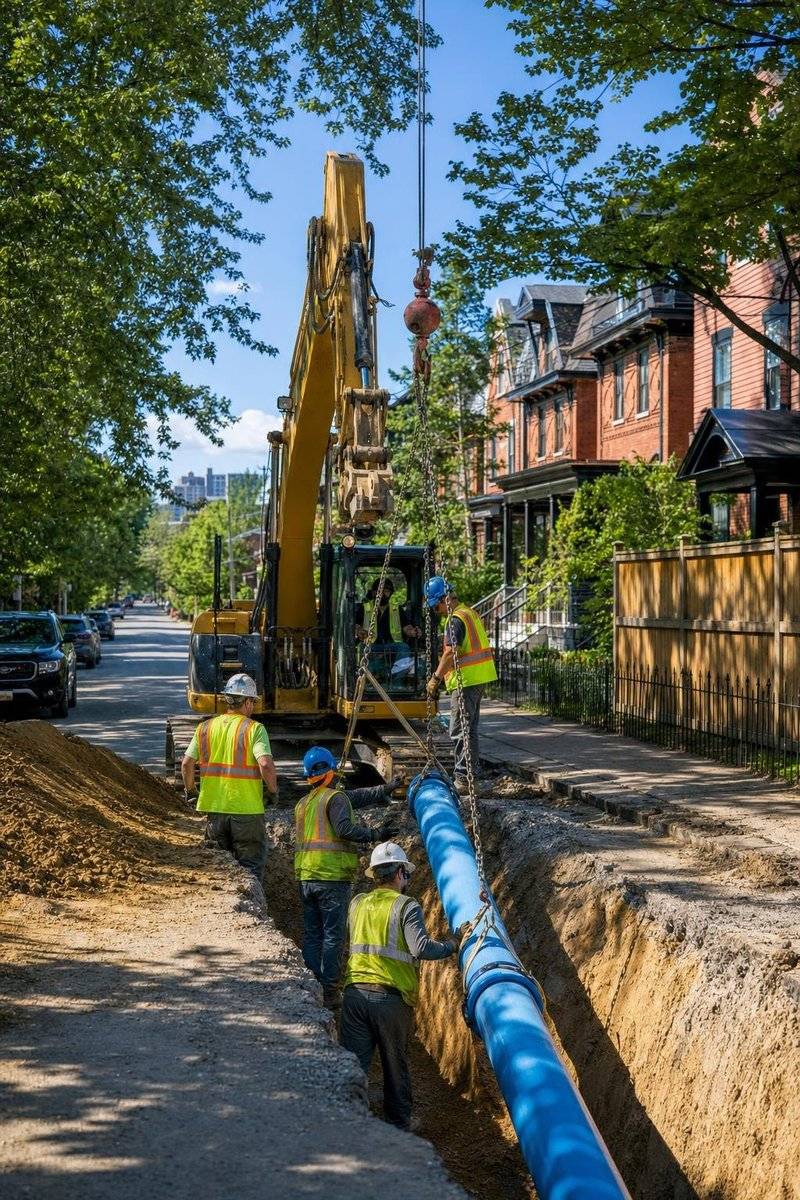
That sale stood out because of its size, not because of what it was. Municipal bonds, or muni bonds, are the ordinary way American states, cities, counties, school districts and public authorities pay for things that will last longer than one budget year. A water main is expected to work for decades, so the city borrows for it and pays the debt back over decades, with interest, from taxes or water bills. The lenders are bondholders: funds, insurers, banks and many households.
01How municipal bonds work: a loan written down as a security
A municipal bond is a promise. The issuer borrows a sum of money (the principal, or face value) and agrees to pay interest on a fixed schedule, typically every six months, then to return the principal on a set maturity date. The Municipal Securities Rulemaking Board (MSRB), created by Congress in 1975 to regulate this market's dealers, puts it plainly: the investor is lending money to the issuer.
Most individual muni bonds are sold in $5,000 denominations. A single deal is usually split into many maturities, so a city that borrows for a new library might have one slice coming due next year, another in five years and another in twenty. Each slice has its own CUSIP number, rate and price.
Before the sale, the issuer publishes an official statement covering what the money is for, what secures repayment, its finances and its pensions. Under SEC Rule 15c2-12, most issuers also agree to keep filing annual financial information and notices of significant events. All of it lands on EMMA, the MSRB's free Electronic Municipal Market Access website, next to the prices of past trades.
02Two main types: general obligation and revenue bonds
The first thing to know about any municipal bond is what stands behind it, and that splits the market into two main types.
A general obligation bond (GO bond) is backed by the issuer's "full faith and credit," meaning its power to levy taxes to pay bondholders. Cities typically use GO bonds for things that earn no money of their own: parks, police stations, school buildings, street repaving. Many states require voters to approve GO borrowing, which is why bond measures appear on so many local ballots.
A revenue bond is repaid from a specific stream of money: water and sewer charges, airport fees, toll receipts, the rent a public housing authority collects. The tax base is not on the hook. The SEC notes that revenue bonds are usually non-recourse, so if the revenue dries up, bondholders have no claim on the city's general funds.
A third type, conduit or private activity bonds, is issued by a public agency for a private borrower such as a nonprofit hospital or a housing developer, which makes the payments.
03Who issues them
Nearly every layer of American government can borrow this way: states, counties, cities, towns and school districts, plus the special districts most residents never think about, such as water authorities, transit agencies, port authorities and hospital districts. U.S. territories such as Puerto Rico and Guam issue them too. The MSRB describes the market as serving tens of thousands of communities.
A side note: a state is not a municipality, yet its bonds are still called municipal bonds. Nobody has found a better word.
04What the borrowed money builds
The projects are the same ones residents in other towns have tried to fund one donation at a time. In Chickasha, Oklahoma, the parks department needed $293,000 to rebuild the Kids Place playground at Centennial Park. The city and a federal Community Development Block Grant covered $185,000, and residents pledged online toward the remaining first-phase cost of the play system, as described on the Centennial Park playground project page.
The difference between the two routes is simple. A donor gives money and gets a playground. A bondholder lends money and expects it back with interest, and the whole community repays it through taxes or fees over the life of the bond. Bonds suit large, long-lived assets; crowdfunding and participatory budgeting tend to fill the smaller gaps a capital budget leaves open.
05The tax exemption, in brief
Interest on most state and local bonds is excluded from federal gross income under Section 103 of the Internal Revenue Code. Many states also exempt interest on bonds issued inside their own borders. That is why munis usually pay less interest than comparable corporate bonds. The details, including the alternative minimum tax and the de minimis rule for bonds bought at a discount, are in the guide to tax-free municipal bonds.
Not every muni is tax-exempt. Cities sell taxable municipal bonds when federal rules do not allow an exemption or when a federal subsidy makes taxable debt cheaper, as it did with the Build America Bonds of 2009 and 2010.
06When a city cannot pay
Defaults are rare, but they happen. On August 1, 2011, Central Falls, Rhode Island, a city of about one square mile and some 19,000 people, filed for Chapter 9 bankruptcy. A few weeks earlier, the state legislature had passed a law giving general obligation bondholders a first lien on the city's property tax revenue. The bondholders were paid in full and on time throughout the case. Retired police officers and firefighters were not so lucky: some saw their pensions cut by as much as 55 percent. The city left bankruptcy in 2012.
The bankruptcy also left many city projects unfunded. Afterwards, residents pledged online for sturdy steel trash and recycling bins in the city's main park, a campaign described on the Jenks Park bins page. A municipal default lands on people who never owned a bond.
07Owning a piece of your own city's debt
The most direct way to lend to your own city is to look it up on EMMA, read the official statement for a recent deal, and buy one of its bonds through a brokerage account, at the initial sale or later from other investors. Some issuers set aside a retail order period during a new sale so that individuals get first access. A few cities, Denver and Cambridge, Massachusetts among them, have gone further and sold small-denomination "minibonds" aimed at residents.
The spokes of this section cover each step:
- How to buy municipal bonds walks through EMMA, brokerage accounts, new issues and markups.
- Are municipal bonds a good investment? weighs the tax advantage against credit, interest rate, call and liquidity risk.
- Municipal bond ETFs explains how funds pool thousands of bonds and how their dividends are taxed.
- How municipal bond yields work covers coupons, prices, yield to maturity and yield to worst.
- The tax-equivalent yield calculator turns a tax-free yield into the taxable yield it matches for your own bracket.
None of these pages quotes live rates or recommends a particular bond or fund. Rates move daily; the mechanics do not.
FAQ
What are municipal bonds in simple terms?
Municipal bonds are loans that investors make to a state, city, county, school district or public authority. The issuer pays interest, usually twice a year, and returns the principal on a set maturity date. The money typically pays for long-lived public assets such as schools, water systems, roads and parks. Interest on most of them is exempt from federal income tax.
What is the difference between general obligation and revenue bonds?
A general obligation bond is backed by the issuer's full faith and credit, including its power to raise taxes to pay bondholders. A revenue bond is repaid only from a specific income stream, such as water charges, tolls or airport fees. If that revenue falls short, revenue bondholders generally have no claim on the issuer's tax revenue, which makes the source of repayment the key question.
Can an ordinary resident buy bonds issued by their own city?
Yes. Bonds issued by a city, county or school district can be bought through most brokerage accounts, either during the initial sale or later from other investors. Individual bonds are usually sold in $5,000 denominations. Residents can read the official statement and see recent trade prices for free on the MSRB's EMMA website before deciding anything.
Are municipal bonds risk-free?
No. Defaults are uncommon, but they occur, as Central Falls, Rhode Island, and Detroit showed in 2011 and 2013. Bond prices also fall when interest rates rise, callable bonds can be repaid early, and some bonds trade rarely, which can make them hard to sell quickly at a fair price. Credit ratings help but can change after purchase.
Why do municipal bonds usually pay less interest than corporate bonds?
Because the interest on most of them is free of federal income tax, and often of state tax in the issuer's home state. Investors accept a lower stated yield in exchange for keeping more of it after taxes. Whether that trade works out depends on the investor's tax bracket, which is what a tax-equivalent yield calculation measures.
Where can I find information about a specific municipal bond?
The MSRB's EMMA website (emma.msrb.org) is the official free source. It holds official statements, continuing disclosure filings such as annual financial reports, notices of rating changes or missed payments, and prices of recent trades. EMMA does not sell bonds, so purchases still go through a broker, a bank or an investment adviser.
All guides in this section
- Are Municipal Bonds a Good Investment for Ordinary Savers?GuideAre municipal bonds a good investment? Who the tax advantage suits, and the credit, rate, call and liquidity risks behind it, with Central Falls as a case.
- Municipal Bond Rates and How Muni Yields Are CalculatedGuideHow municipal bond rates work: coupon vs yield, why prices fall when rates rise, yield to maturity, yield to call, yield to worst, and what moves muni yields.
- How to Buy Municipal Bonds, From Research to SettlementGuideHow to buy municipal bonds: researching an issuer on EMMA, picking an account, new issues vs the secondary market, markups and resident minibonds.
- Municipal Bond ETFs and How They Differ From Owning BondsGuideHow municipal bond ETFs work: national, state, short-term and high-yield funds, NAV vs market price, exempt-interest dividends and costs to compare.
- Tax-Equivalent Yield Calculator for Municipal BondsGuideTax-equivalent yield calculator: compare a tax-free muni yield with a taxable one, with the formula, the state-tax version and two worked examples.
- Tax-Free Municipal Bonds: How Federal, State and AMT Rules ApplyGuideHow tax-free municipal bonds work: the Section 103 exemption, state rules, the AMT on private activity bonds, the de minimis rule and Social Security.
- Taxable Municipal Bonds and Why Cities Issue ThemGuideTaxable municipal bonds explained: why cities sell them, what Build America Bonds were, how state tax applies and which investors tend to hold them.