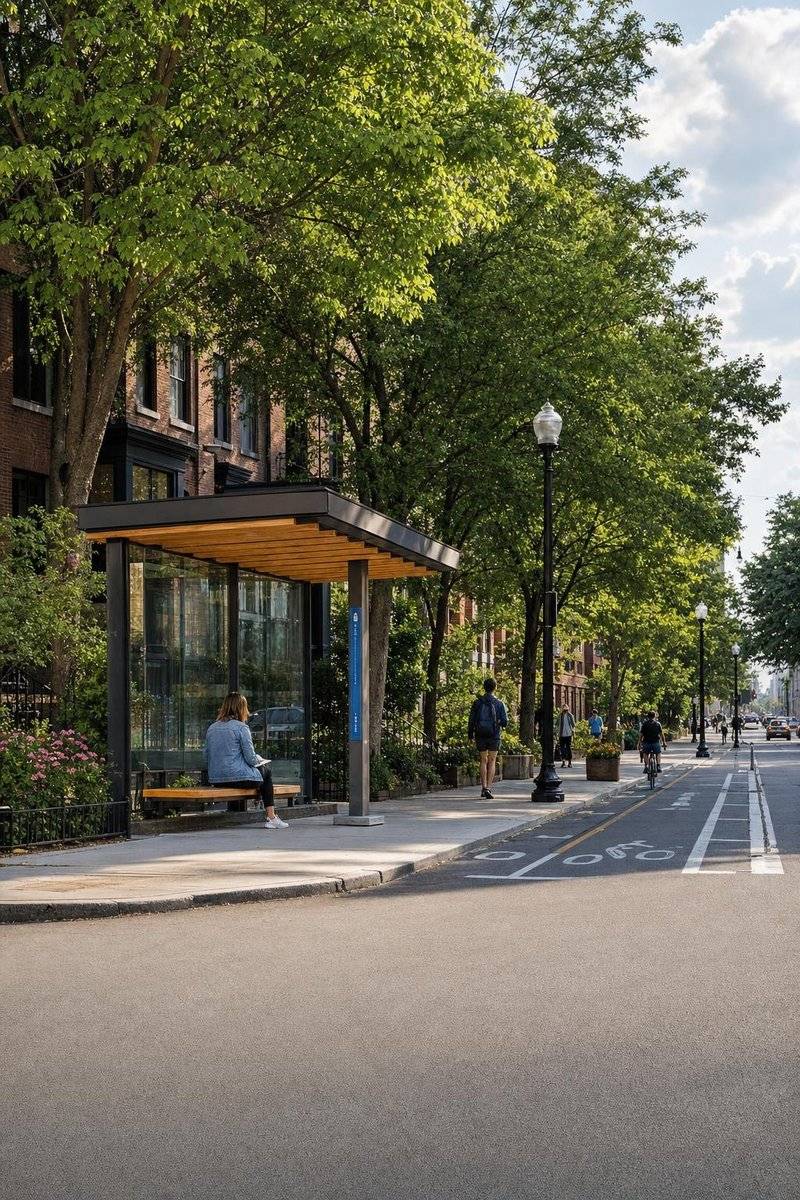
Paris put the question to its residents in September 2014. Mayor Anne Hidalgo had promised to hand 5 percent of the city's investment budget to a public vote over her term, about 426 million euros in all. The first ballot was modest, 15 proposals chosen by City Hall with 20 million euros at stake, and about 40,000 people voted. By the third year turnout had climbed past 92,000. Among participatory budgeting examples, Paris is the one most often cited for scale.
It is not the only model, and scale is not the only measure. The six cases below show how differently the same idea can work in practice.
01Porto Alegre, Brazil: the original
Porto Alegre, a city of more than a million people in southern Brazil, started participatory budgeting in 1989 under Mayor Olívio Dutra of the Workers' Party. Residents met in neighborhood and thematic assemblies, set priorities for spending on things like paving, sanitation and housing, and elected delegates to a citywide budget council.
The early results drew wide attention. A World Bank study reported that the share of households with water access rose from about 80 to 98 percent between 1989 and 1996, and the Bank presented the process as a good example of transparency improving public management. Researchers have since debated how much of that change participatory budgeting caused, and the city's own process weakened under later administrations before it was suspended. The origin story remains the reference point for almost every program since.
02Chicago's 49th Ward: the first in the United States
In 2009, Alderman Joe Moore of Chicago's 49th Ward, which covers Rogers Park, decided to let residents choose how to spend his ward's discretionary capital budget, known locally as "menu money." He had learned about participatory budgeting at the US Social Forum in Atlanta in 2007. The ward held its first assemblies in late 2009 and its first vote in April 2010.
The projects were the nuts and bolts of city life: street resurfacing, sidewalk repairs, bike lanes, murals, street lights and community gardens. That practicality was the point. Residents learned what a block of sidewalk costs and why not every idea could be built.
03New York City: council districts at scale
New York adopted the model in 2011, when four council members agreed to put at least $1 million each of their discretionary capital funds up for a vote, working with the Participatory Budgeting Project and the community organization Community Voices Heard. The first cycle allocated about $5.6 million to 27 projects. Participation grew to more than 30 council districts in later cycles.
Typical winners include school technology, library upgrades, park renovations and street safety improvements. In 2018 New York voters also approved a charter amendment creating a Civic Engagement Commission and a citywide process, now called The People's Money. Our guide to participatory budgeting in NYC covers both programs.
04Vallejo, California: first citywide
Vallejo went through Chapter 9 bankruptcy starting in 2008. In April 2012 its city council approved a participatory budgeting process funded from a local sales tax measure, making it the first US city to run the process citywide rather than in a single district. Coming out of a fiscal crisis, the city saw it partly as a way to rebuild trust with residents about how public money was spent.
Vallejo shows that participatory budgeting is not only for wealthy cities with spare cash. It can be most valuable when money is tight and trust is low.
05Cambridge, Massachusetts: steady and small
Cambridge launched its process in late 2014. In the first vote, held in March 2015, 2,727 residents aged 12 and older chose six projects totaling $528,000 from the city's capital budget. Immigration status did not matter.
What makes Cambridge interesting is persistence. The city has run the process every year since, collecting more than 11,000 ideas and committing over $11 million to more than 80 projects across twelve cycles. The amounts are modest, but the habit is now part of how the city budgets.
06Paris: the largest in Europe
Paris launched its budget participatif in 2014 with the 5 percent pledge. After the first year, residents submitted their own proposals rather than choosing from a city list. Paris described its process as the largest in the world, a claim that is debated. Chengdu in China has been reported to run a larger annual participatory budget, though it works very differently.
A common criticism of processes this large is that when thousands of proposals compete, ideas backed by organized groups find it easier to get out the vote.
07What the examples have in common
Across these cases, a few patterns hold.
A clear amount of money, committed in advance. Every successful process names the sum before ideas are collected.
Elected officials who keep their word. In New York and Chicago, individual council members chose to give up control of their discretionary money. In Jackson, Michigan, a vice mayor did something smaller in the same spirit, pledging to match every resident donation toward neighborhood watch signs. Officials who put money behind residents' choices, at any scale, make residents believe the process is real.
Projects people can see. Sidewalks, playgrounds and library computers win because voters can check whether they appeared.
And sustained support. Processes that had dedicated staff and nonprofit partners, like Cambridge and New York, lasted. Those that depended on one champion often faded when that person left office.
For the basics of how a cycle works, see what is participatory budgeting. For residents who want to add new money rather than allocate existing funds, see civic crowdfunding.
FAQ
What is the most famous example of participatory budgeting?
Porto Alegre, Brazil, where the process began in 1989 under Mayor Olívio Dutra. Residents set spending priorities through neighborhood assemblies and elected delegates to a budget council. The World Bank and many researchers studied it, and it became the model for programs in Latin America, Europe and North America. The city later suspended the process.
Where was participatory budgeting first used in the United States?
Chicago's 49th Ward, in 2009. Alderman Joe Moore let residents decide how to spend his ward's discretionary capital funds, known as menu money, on projects such as street repairs, bike lanes and murals. The first public vote took place in April 2010. Vallejo, California became the first US city to run a citywide process in 2012.
What kinds of projects win participatory budgeting votes?
Visible, practical projects usually win: school technology and bathroom repairs, park and playground renovations, library upgrades, street trees, bike lanes, bus shelters and street lighting. Projects that serve a clear group, such as students or seniors, and that voters can see completed within a year or two tend to do best on the ballot.
Does participatory budgeting work in small cities?
Yes. Cambridge, Massachusetts, with about $500,000 to $1 million per cycle, has run the process every year since 2014. Vallejo, California adopted it citywide during recovery from bankruptcy. Smaller cities often find it easier to reach residents and deliver projects quickly, though the staff time required can be a larger share of their resources.
Why have some participatory budgeting programs ended?
Common reasons include changes in political leadership, budget cuts that removed the money on the table, low or uneven turnout, and slow delivery of winning projects that eroded trust. Porto Alegre's process weakened under later administrations before it was suspended. Programs with dedicated staff, steady funding and outside partners tend to survive longer.