Abraham Lincoln called the Department of Agriculture "the People's Department." In 2009 USDA borrowed the phrase for a garden at its Washington headquarters, and in 2022 it reopened the People's Garden Initiative to school gardens, community gardens and urban farms across the country. Registration brings a sign and a spot on a national map, not a check. That gap between recognition and money is typical of community garden grants: there is plenty of goodwill toward gardens, and less cash than most groups expect.
The money that does exist sits in a handful of places. Here is where gardens have found it, and what each source asks for.
01USDA urban agriculture grants
The 2018 Farm Bill created USDA's Office of Urban Agriculture and Innovative Production, led by the Natural Resources Conservation Service. Its competitive Urban Agriculture and Innovative Production grants come in two forms: planning projects and implementation projects. Recipients have included community gardens and nonprofit farms in economically distressed neighborhoods, and the stated goal is more food production and better food access.
These are serious federal grants with serious paperwork. They suit an established nonprofit, a city or a university partner more than a new garden club. Rounds and amounts have changed from year to year, so check USDA's urban agriculture pages for the cycle that is actually open.
USDA also funds local food projects indirectly through the Cooperative Extension System. Extension offices at land-grant universities run Master Gardener programs, soil testing and sometimes small materials grants. NC State Extension, for example, publishes a full community garden handbook with sample agreements. Help from extension is often worth more than a small grant.
02City and county money
Many cities fund gardens through their parks department, a land bank or a sustainability office. New York's GreenThumb program, now run by NYC Parks, supports gardens with materials, workshops and technical help rather than open-ended grants. Philadelphia Parks and Recreation ran a Youth Urban Agriculture Program that built gardens at recreation centers.
Federal Community Development Block Grant money, which cities distribute locally, can also reach gardens when they count as a public facility serving a low- and moderate-income area. The way in is your city's community development office during its annual planning process.
03Foundations, food banks and health funders
Regional community foundations are the most common grant source for gardens. They like projects with a clear neighborhood benefit and a responsible organization behind them. Health systems and hospital community benefit programs sometimes fund gardens as part of nutrition work. Food banks occasionally support gardens that grow produce for pantries.
Corporate programs come and go. The AARP Community Challenge, running since 2017, has listed gardens among the public places its quick-action grants can improve. Garden centers and seed companies sometimes donate materials rather than cash, which still counts toward a match.
04What a garden grant application needs
Funders ask the same questions of almost every garden.
Site control. A signed land use agreement for at least three years is the single most persuasive attachment. Gardens on public land should include a letter from the parks department or landowner.
Water. Say where it comes from and who pays the bill.
A plant and materials list with prices. In 2013 the Rivera Recreation Center garden in Philadelphia listed exactly what its money would buy: three fruit trees, twelve berry bushes, fifty eco-perennials, 250 strawberries and groundcovers, three cubic yards of mulch, an orchard design and planting supervision. Fifty backers funded it in full. The Rivera Rec Center community garden campaign is short enough to read in a minute and still answers every budget question.
Who benefits. Name the groups: children in a recreation program, older adults from a neighboring center, families using a food pantry. The Rivera plan paired children aged 6 to 12 with gardeners from the Mann Older Adult Center next door, and said so.
Maintenance. Who waters in August, who manages plots, who pays for water next year.
05Raising the match
Few garden grants cover everything. The usual gap is somewhere between a few hundred and a few thousand dollars, which is a good size for neighborhood fundraising.
Sponsored beds work well: a family, a business or a church pays for one raised bed and gets a small plaque. Plant sales in spring raise money and recruit gardeners at the same time. A matched online campaign, where a local business doubles every dollar up to a set amount, gives donors a reason to give now.
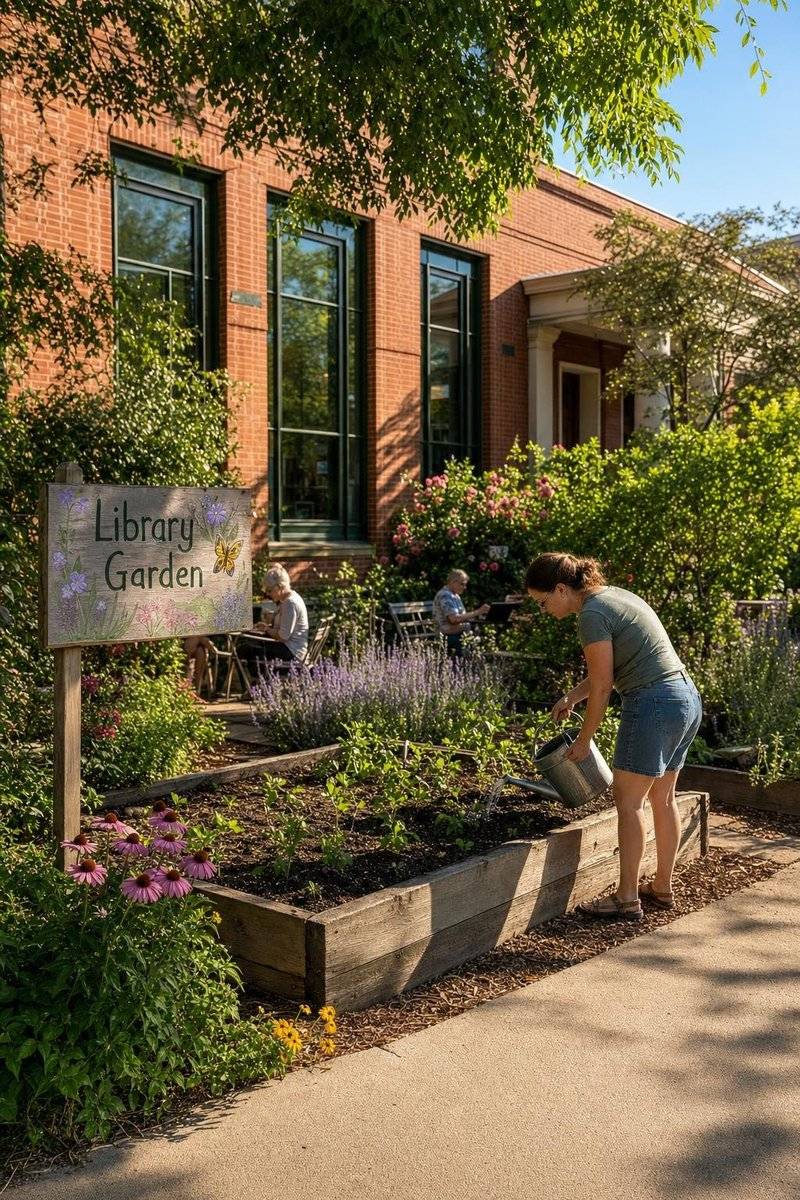
Public institutions can help here too. When the Catawba County Library in Newton, North Carolina planned a garden with twelve raised beds and a shade garden for reading programs, it asked residents directly. The 2014 campaign for the library's garden reached about $3,200 of its $4,860 goal. A partial result like that still buys beds and soil, which is one reason gardens are a forgiving project to fund in phases.
For the practical side of setting up a site, see how to start a community garden. For fundraising formats beyond the garden world, see community fundraising ideas, and for a broader view of the grant world, community grants.
Fencing turns up in almost every garden budget. Funders will often pay for one, but neighbors notice it. Lower, open fences with a visible gate and a posted contact tend to draw new members. Tall, locked ones keep out deer and, sometimes, the neighborhood.
FAQ
Are there federal grants for community gardens?
Yes. USDA's Urban Agriculture and Innovative Production grants, created after the 2018 Farm Bill, have funded community gardens and nonprofit farms through planning and implementation projects. Community Development Block Grant money distributed by cities can also support gardens in eligible neighborhoods. Federal grants involve detailed applications and reporting, so many small gardens apply through a nonprofit or city partner.
Does the USDA People's Garden program give money?
Registering a garden with the USDA People's Garden Initiative brings recognition, a sign and a listing on a national map, but it is not a grant program in itself. Eligible gardens include school gardens, community gardens and urban farms that benefit the community and educate the public. Some gardens use the listing as a credential when applying to other funders.
What do community garden grants usually pay for?
Most cover start-up costs: lumber for raised beds, soil and compost, fencing, water connections, tools, seeds and plants, and signage. Some cover educational programming or a part-time coordinator. Few pay for ongoing water bills or land rent, so plan a separate source for those costs, such as plot fees or a city maintenance agreement.
Can a school or library apply for a community garden grant?
Yes, and they often have an advantage. Public schools and libraries are eligible applicants for many government and foundation programs, and they already handle insurance, water and staff. The Catawba County Library in North Carolina and the Rivera Recreation Center in Philadelphia both planned gardens tied to their own programs, which made the purpose and the users easy to explain.
How can a new garden group improve its chances?
Secure written permission to use the land, price your budget with real quotes, and show a local match, even a small one. Partner with an established nonprofit or the city if you are not incorporated. Call the funder before applying to check that your garden fits. Clear photos of the site as it is today help reviewers picture the change.