Three signatures out of a thousand needed. That was the count on a Milwaukee streetcar petition in October 2012, a one-line appeal saying the city had a streetcar plan but needed money to kickstart it.
It is a small artifact of a much bigger fight. Milwaukee's streetcar had already been argued over for years by then, and it would take six more before anyone rode it.
A plan stuck on the drawing board
Milwaukee is one of many American cities that tore out their streetcar lines in the mid-twentieth century and later considered bringing them back. The modern plan grew out of federal transportation money set aside for Milwaukee in the 1990s, when Congress earmarked funds for transit in the region. Disagreement among city, county and state leaders over how to spend it left much of the money unused for more than a decade.
By 2012 the city had a defined starter route: a short line connecting the downtown core, the Intermodal Station where Amtrak and intercity buses stop, and the dense neighborhoods of the Lower East Side. Supporters argued it would link the train station to downtown jobs and spur development along the route. Opponents, including suburban and state politicians, said it was an expensive vanity project that would siphon money from buses.
The petition sided with supporters. It asked for no specific amount and offered no budget. Its purpose was to show that residents wanted the project funded, a step explained in the guide on how to propose a project to your city.
How the money came together
The Milwaukee Common Council approved the project on January 21, 2015, and confirmed the vote 10 to 5 on February 10. The 2015 cost estimate was about $123.9 million.
Federal money was the largest piece. The city used the long-dormant federal transit funds from the 1997 award and added a further federal grant in October 2015 to help pay for a lakefront spur. A Wisconsin Policy Forum analysis later found that federal grants covered 54 percent of the first phase.
The local share came from tax increment financing. Rather than raise property taxes directly, the city extended the life of existing TIF districts and directed the extra property tax growth they captured toward the streetcar. Milwaukee was the only city among its peers to use TIF as the main local source for building a streetcar system, the Policy Forum noted. TIF works a bit like a municipal bond in reverse: the city borrows against future growth in a defined area. The guide to buying municipal bonds explains the investor side of that kind of borrowing.
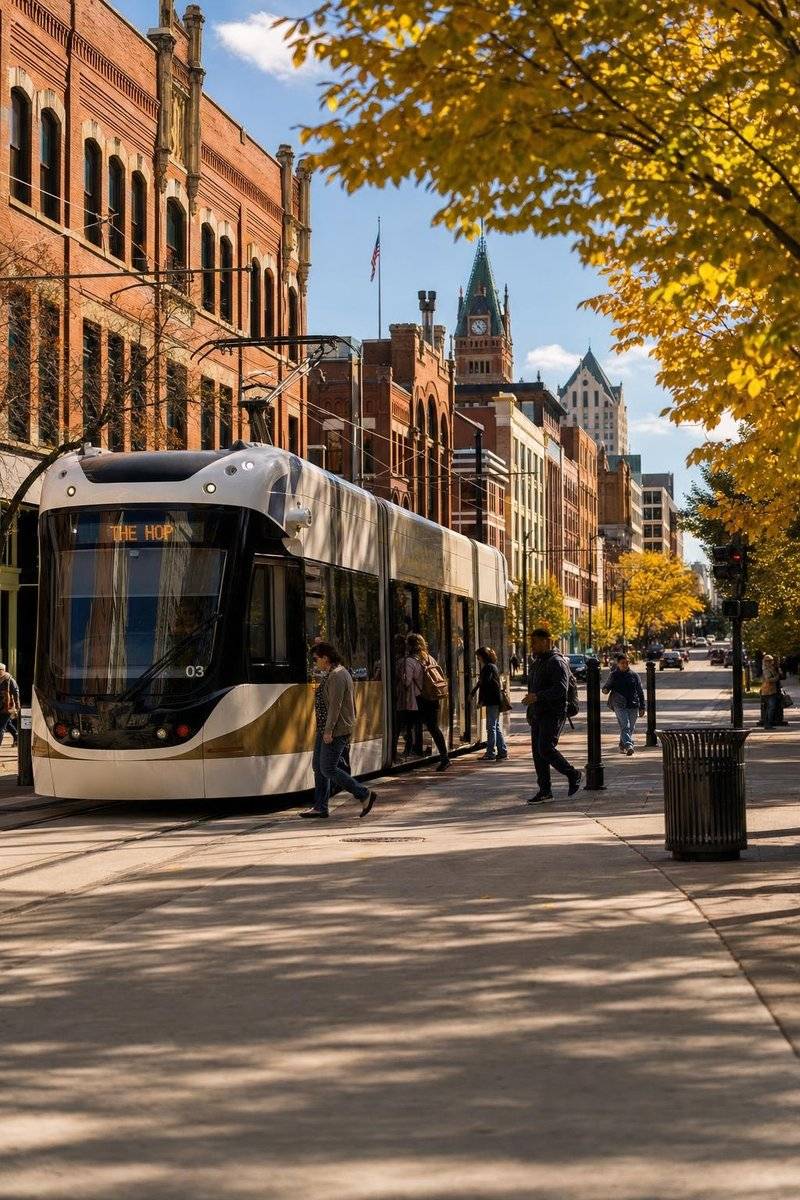
There was a sponsor too. The Forest County Potawatomi Community, owner of the Potawatomi Hotel & Casino, agreed to a 12-year, $10 million sponsorship that included naming rights. The system became "The Hop, presented by Potawatomi Hotel & Casino," and the sponsorship paid for free rides in the first year.
Opening day and after
The Hop opened on November 2, 2018. The first route, the M-Line, runs about 2.1 miles from the Intermodal Station through downtown to the Burns Commons area. A 0.4-mile lakefront extension, the L-Line, opened in limited form on October 29, 2023, and began full daily service on April 11, 2024. Together the lines have 21 stops.
The free-fare year was meant to end. It did not, partly because the system to sell and validate fares was delayed, and rides on The Hop have stayed free. Its busiest day came on July 13, 2019, with about 9,000 riders.
The state steps in
The streetcar's funding model eventually ran into state politics. In 2023 Wisconsin passed Act 12, a large shared-revenue bill that gave Milwaukee the power to raise a local sales tax. Tucked into it was a provision barring the city from using taxes, including TIF, to operate or expand The Hop.
That restriction matters because federal transit grants require a local match. Without a tax-based source, the city cannot easily put up its share for new extensions, and planned routes toward other neighborhoods were left without a clear way forward.
The 2012 petition needed a thousand names and got three. The streetcar it asked for still got built, financed through a combination few people would have guessed in 2012: old federal earmarks, stretched TIF districts and a casino's sponsorship.