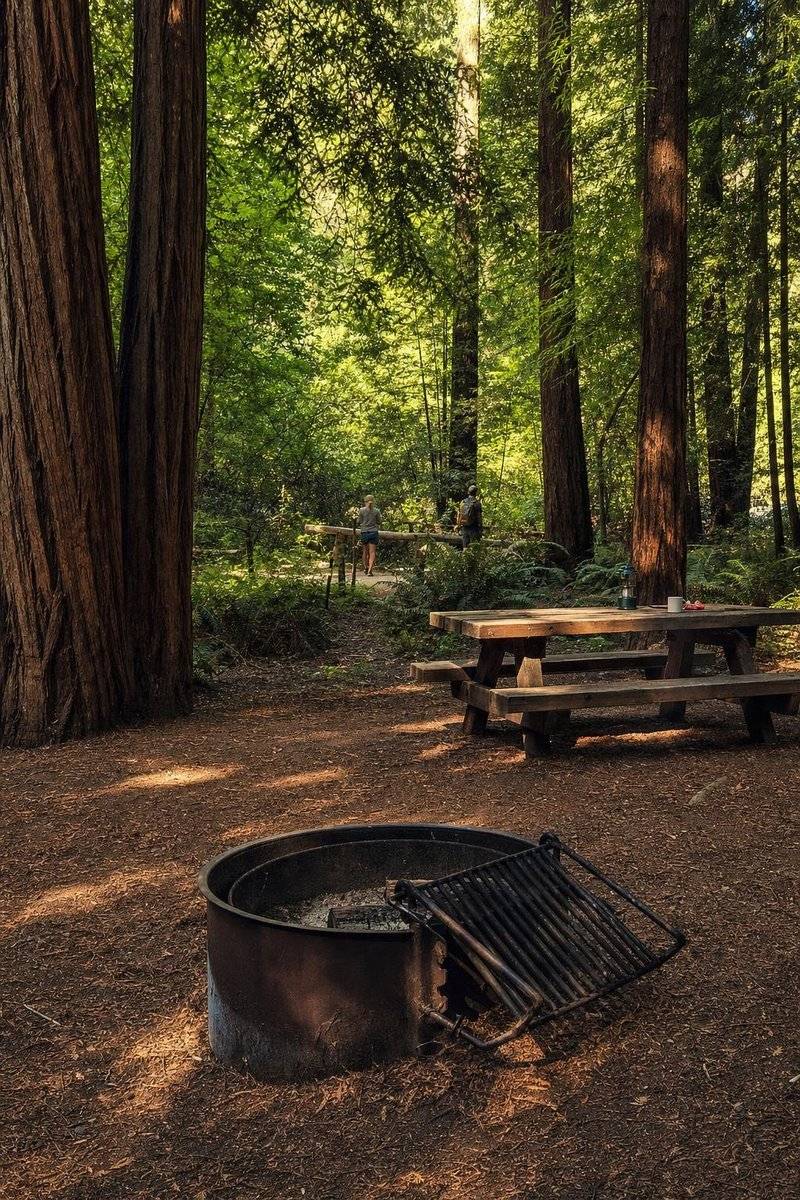
At a campsite under the redwoods, the fire pit is where everything happens: dinner, marshmallows, stories. At Memorial County Park in the Santa Cruz Mountains, many of those pits were old brick structures with heavy metal grills, awkward to use for a child and close to impossible for a camper in a wheelchair. In 2016 a parks nonprofit set out to replace sixty of them.
The park
Memorial County Park sits in the redwood forest near the tiny community of Loma Mar, on the coastal side of the Santa Cruz Mountains in San Mateo County. It was established in the 1920s as a memorial to county residents who died in World War I and is one of the oldest parks in the county system. Pescadero Creek runs through it under old-growth redwoods.
Its location is part of its appeal. The park lies within about 20 miles of Interstate 280, close to the populated Peninsula and San Francisco, yet feels far removed from the city once a visitor is under the trees. It has about eight miles of hiking trails and popular picnic areas, but it is best known for camping. The park provides 158 campsites across several campgrounds, including family sites and larger group camps. That mix allows several generations to camp together and makes the park a regular stop for youth and school education programs.
What the project would change
The San Mateo County Parks Foundation, the nonprofit partner of the county parks department, led the fundraising. The plan was to replace old fire grills at 60 campsites with universal access fire rings.
The new rings have a flip-back grate that is easy to lift, so a camper does not need to wrestle a heavy grill. An outer ring forms a heat barrier around the fire, which keeps people, especially small children, from touching hot metal by accident. The heights and clearances are designed so that someone using a wheelchair can reach the cooking surface.
The project was framed as going beyond legal compliance with the Americans with Disabilities Act. The Foundation described it as applying universal design: making facilities usable by as many people as possible, regardless of age, ability or circumstances, rather than adding a single accessible site and leaving the rest unchanged.
The budget
The online goal was $27,540, which included card processing and service fees. That money was for buying the 60 fire rings. Installation was covered separately. County park rangers, working with volunteers, would dismantle and remove the old grills and set the new rings in their places, so the campaign did not need to pay contractors.
Spread across 60 sites, the goal works out to roughly $460 per campsite including fees. The plan was to install them over the winter months, in a period of two to three months, once the money arrived, so that campers would find the new rings when the camping season opened.
By April 2016, nine backers had pledged $1,400. Whether the full goal was reached through the campaign, or the rings were bought with other money, could not be confirmed.
How park foundations fill gaps
County park systems often rely on a foundation for this kind of project. The Foundation also pays for park aides at Bicycle Sunday on nearby Cañada Road, and it raises money for trails, education programs and equipment that do not fit neatly in the county's operating budget. Donors can give to a specific project, which gives the foundation a clear story to tell. The guide to community grants covers how such groups combine individual gifts, grants and corporate sponsorship, and the guide to civic crowdfunding explains how campaigns tied to one concrete purchase tend to perform.
The campground today
Campers at Memorial Park still cook over fire rings at their sites, alongside a picnic table and a food locker at each one. Campfires are subject to fire danger conditions, and the county gives campers campfire instructions when they arrive. When fire risk is high, fires can be restricted no matter what kind of ring sits at the site.