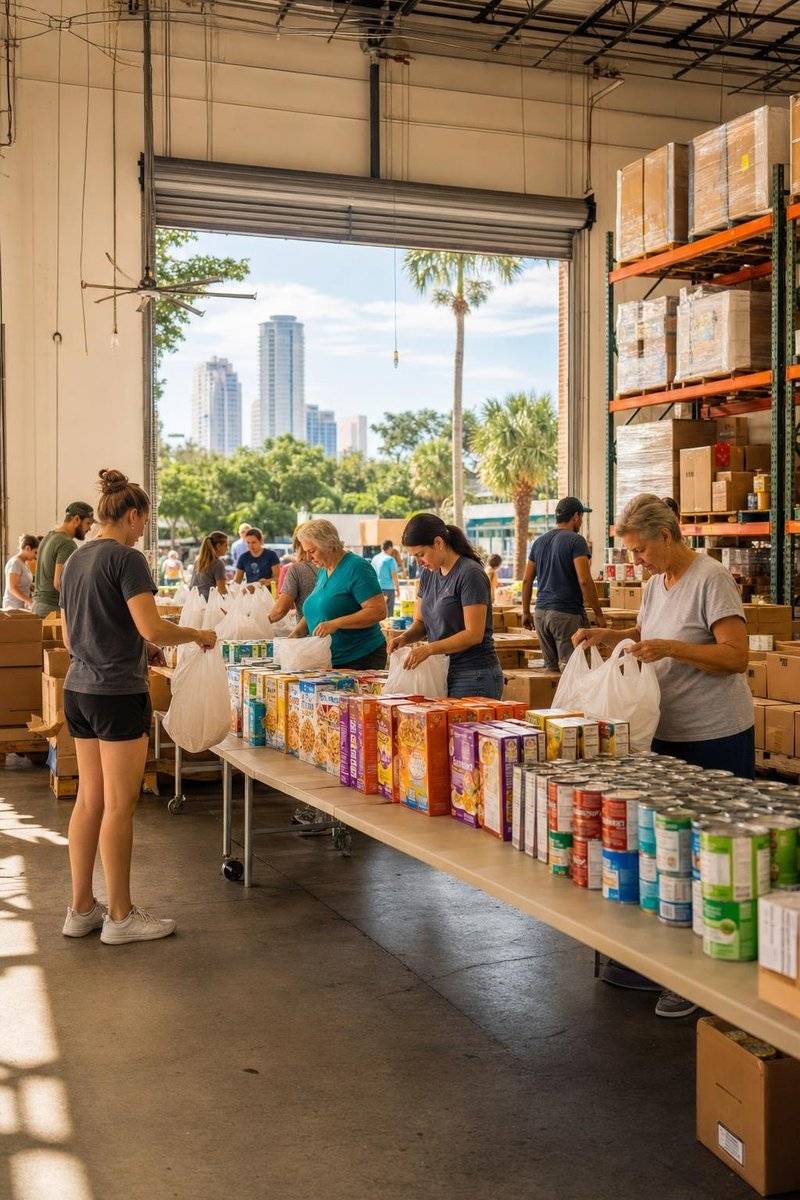
Each bag held six meals: two breakfasts, two lunches and two dinners, all shelf-stable and easy for a child to open without help. Twice a month the bags went home before the weekend with children at Oak Park Elementary School in Tampa, meant to carry them through to Monday's school breakfast.
The school
Oak Park Elementary had 608 students when the campaign was written. Of those, 99.06 percent qualified for free or reduced-price school lunch. School counselors and social workers told the food bank that about 100 of those children were the most at risk: kids who came back on Monday unable to concentrate because they had eaten very little since Friday.
The organizers cited a figure that 25.9 percent of children in Hillsborough County lived with food insecurity. They also pointed to research by Children's HealthWatch, a national network of pediatricians and public health researchers, on how hunger affects children's health, growth and learning. Hungry children, the research found, do worse in school and fall further behind over time.
Who ran it
The program was run by Feeding America Tampa Bay, the regional food bank for a ten-county area on Florida's Gulf Coast, now known as Feeding Tampa Bay. In 2012 it distributed more than 35 million pounds of food, over 30 million meals, mostly through more than 600 partner agencies such as church pantries, soup kitchens and shelters.
Children, the food bank argued, needed something more targeted. When it asked Hillsborough County Public Schools where the biggest gap in student nutrition was, the district's answer was weekends.
The plan and the cost breakdown
In the year before the campaign, the food bank had distributed almost 4,000 bags a month at 17 locations across Hillsborough and Pinellas counties, moving to twice-monthly deliveries at each site. Oak Park had been one of those sites for several years. The goal for the 2013–2014 school year was to keep it going.
The numbers were laid out in full:
- 100 children
- a bag twice a month across the 40-week school year, 2,000 bags in total
- six meals per bag, 12,000 meals for the year
- about 14,000 pounds of food
- $5 per bag, covering the food, delivery and a small share of administration
The total was $10,000. With card processing and service fees, the online civic crowdfunding goal was $10,800. Twenty-one backers pledged $1,800, short of the target, and under the all-or-nothing rules the pledges were not collected. No public source found for this page says how the Oak Park program was paid for that year. The site's list of community fundraising ideas covers some of the other approaches food programs use for steady, recurring costs like this one.
Why the food bank later dropped backpacks
The more surprising part of the story came later. Around 2018, Feeding Tampa Bay ended its backpack program altogether, according to a 2023 report in Food Bank News.
The reason was research. The decision followed a 2016 study led by a University of South Florida anthropologist, Dr. David Himmelgreen, at a local Boys and Girls Club. It found that many children got little benefit from the bags. Much of the food was shared with siblings, parents and friends. Some items were unfamiliar to families in a largely Hispanic community and went unused. Adding more food made the bags too heavy for small children to carry, and the arrangement put children in the position of feeding their households.
The food bank switched to school pantries instead. It piloted eight in 2018 and by 2023 supported 75 across five school districts. Pantries can hold frozen meals and dairy, families choose their own food, and schools have used the visits to help parents sign up for SNAP.
A side note on the meal count
The "12,000 meals" figure is a planning estimate, not a measure of what children ate. That gap between food sent home and food a child actually eats is exactly what the later research tried to measure.
Oak Park Elementary, on North 46th Street, later turned up on the food bank's list of summer meal sites, a different way of reaching the same children.