Every weekday morning, a large share of the working population of Murrieta and neighboring Temecula gets in the car and leaves. The two cities sit in southwest Riverside County, about an hour north of downtown San Diego, and many residents commute to technology jobs in San Diego and Orange County. City officials in Murrieta wanted some of those jobs to start at home.
Their tool was an empty building.
From City Hall to incubator
When Murrieta's city offices moved, the former City Hall on Beckman Court was left with spare space. In 2012 the city turned it into the Murrieta Regional Technology Innovation Center, usually shortened to the Murrieta Innovation Center. The idea was a business incentive program aimed at young technology companies: low-cost office space, plus mentoring and business resources, so that founders could spend their limited money on growth instead of rent.
The center came with a built-in exit rule. Companies accepted into it could only stay for a set period. After that they were expected to move into privately owned space somewhere in the community, freeing their desks for the next startup and, ideally, adding a growing employer to the local commercial market.
By mid-2013 the incubator had three tenants: a national security company and two scientist-entrepreneurs working on cancer research and biomarker discovery.
Forty chairs
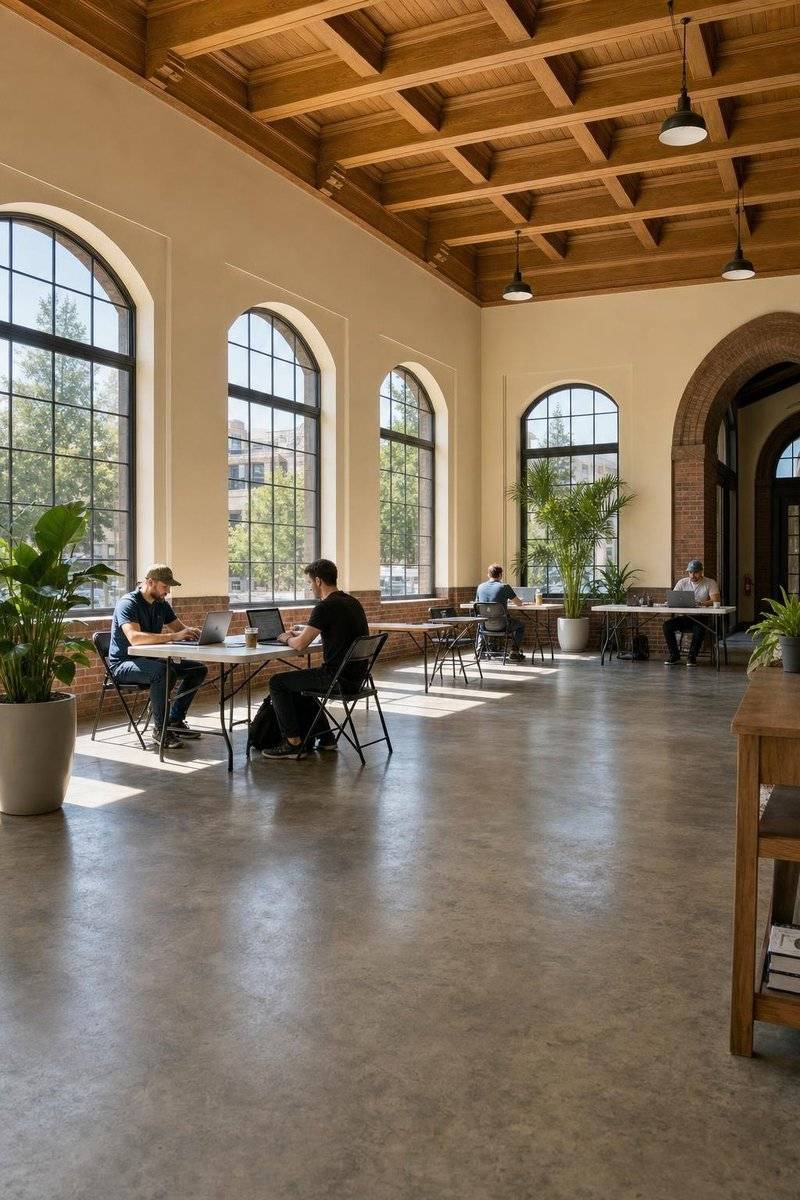
To grow beyond three companies, the center needed furniture. That was the whole ask. The city's Economic Development Department set out to buy 10 new tables and 40 rolling chairs, enough to seat 40 new entrepreneurs in the open workspace of the former City Hall.
The online civic crowdfunding campaign had a goal of $3,240, which included card processing and service fees. Twenty days before the deadline, four backers had pledged $320, about a tenth of the goal. The campaign ran on an all-or-nothing basis, and no public source found for this page indicates that it reached its target. The San Diego Reader covered the effort in August 2013 under a headline noting that Murrieta was turning to the public to fund its business center.
The city's case for the campaign was economic. An investment in local startups, it argued, was an investment in local jobs, and the cities that supported entrepreneurs would be the ones to see new employment and growth. For small, specific purchases like furniture, the site's guide to community grants describes other sources cities often tap instead.
A side note on reusing old city halls
Murrieta was not alone in finding a second life for municipal buildings. When cities consolidate offices into new civic centers, the old buildings can be hard to sell or lease as they are. Turning one into an incubator lets a city keep the property in public hands while putting it to work, with tenant rent offsetting part of the upkeep. The trade-off is that the city becomes a landlord, with all the vacancies and repairs that brings.
How the center grew
Whatever happened to the furniture campaign, the incubator itself took off. Local outlets including Patch and Valley News reported on its growth over the following years. The center narrowed its focus toward life sciences and medical technology. One report described Super Family, a company from the Netherlands, joining 13 U.S.-based startups as the center's first international tenant. Loma Linda University leased the former council chambers for a health care innovation space at a nominal rent of $1 a year.
In 2020 the city contracted Impact Southwest Riverside County, a local nonprofit, to manage the center. Later upgrades were paid for with investment from the U.S. Economic Development Administration, Riverside County and the City of Murrieta.
The address is 26442 Beckman Court. In 2013 the room where the city council once met was part of a building asking the public for 40 chairs; a few years later it was leased to a university for a dollar a year.